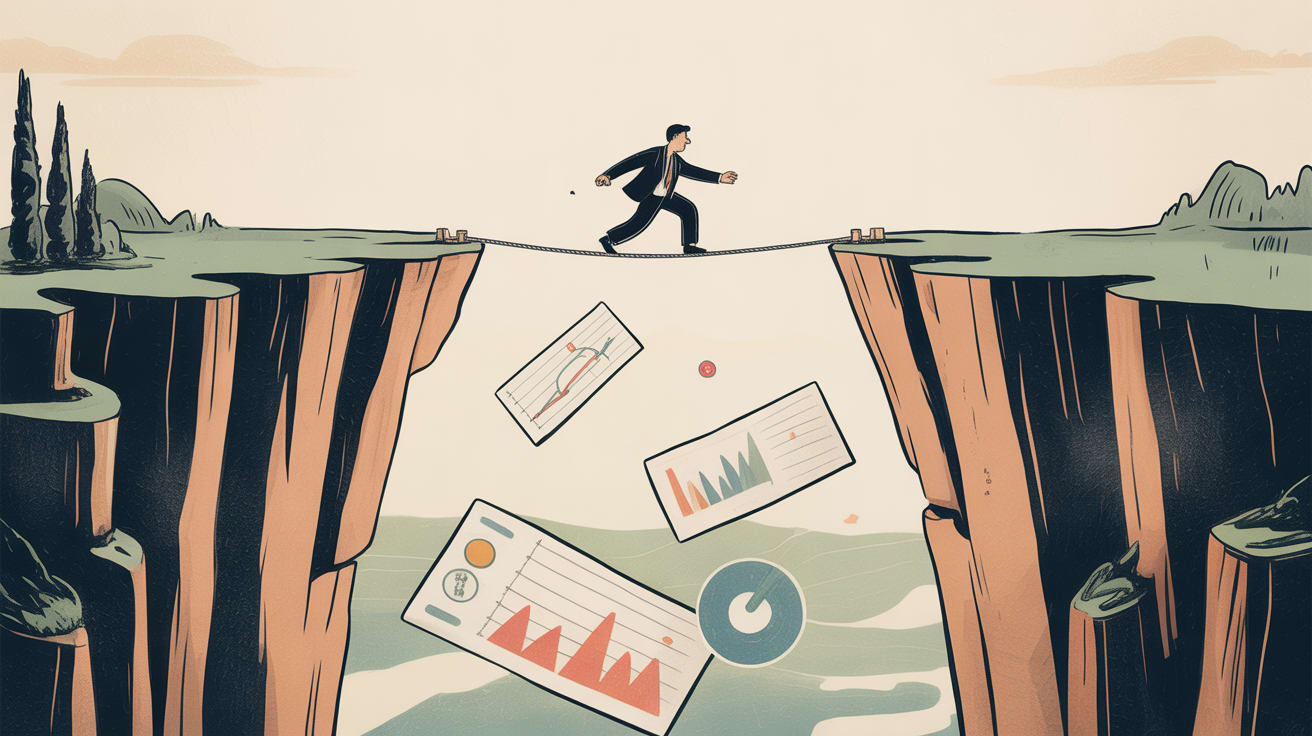
Most brands are using AI ad creative wrong. Here's a three-step strategic framework to close the gap between AI hype and measurable results.
The briefing rooms in Jakarta, Bangkok, and Manila are having the same conversation right now: AI is going to transform our creative output. The problem is that most teams are about eighteen months into that conviction and still struggling to show their CFO a single clean line connecting AI spend to revenue.
Why AI Ad Creative Is Failing Most Teams
HubSpot CEO Yamini Rangan put it cleanly in a recent post: the gap between what the market says about AI and what business leaders actually experience is widening, not closing. The loudest AI narratives — replacement, disruption, token-maximisation — are not the questions real operators are asking. They want to know which systems they can trust, how to measure the ROI, and how to make their existing people more effective.
This disconnect is acutely visible in paid social. Meta’s algorithm now demands a volume of creative variants that simply wasn’t required three years ago — multiple aspect ratios, multiple hooks, continuous refresh to combat ad fatigue. For mid-market brands in Southeast Asia without a 20-person in-house studio, that’s an existential creative problem. The instinct is to throw AI tools at it. The mistake is treating those tools as a production line rather than a strategic system.
The result: a flood of on-brand-ish assets that look like AI made them, perform below the control, and quietly erode brand equity on Shopee ads and Meta placements simultaneously.
The Three-Step System That Actually Works
Social Media Examiner’s Michael Stelzner recently outlined a framework worth taking seriously, particularly for resource-constrained teams. The logic is straightforward but the sequencing matters.
Step one is the creative brief — not the prompt. Before any AI tool opens, the team must articulate the specific emotional job the ad is doing: is it stopping the scroll, qualifying intent, or closing a retargeting window? Each requires a structurally different creative approach. Brands that skip this and jump straight to image generation end up with visually coherent but strategically incoherent assets.
Step two is human-AI iteration, not human-AI delegation. The most effective workflows treat AI output as a first draft that a strategist interrogates, not a final asset that a junior coordinator publishes. In practice, this means a creative lead reviewing AI-generated options against the brief and feeding specific, structured feedback back into the generation loop — not vague prompts like “make it more engaging.”
Step three is systematic performance tagging. Every AI-assisted variant needs a naming convention that captures the hypothesis it was testing — hook type, visual treatment, offer framing. Without this, performance data from Meta or TikTok Ads Manager becomes noise. With it, you start building a proprietary insight layer about what your specific audience responds to, which no AI model trained on generic data can replicate.
The Southeast Asia Variable Nobody Is Accounting For
The standard AI creative frameworks being published in US and UK trade press are optimised for English-language, single-platform contexts. Southeast Asia introduces compounding complexity that makes the briefing step even more critical.
Consider a regional FMCG brand running campaigns across Thailand, Indonesia, and the Philippines simultaneously. The visual grammar of what reads as “premium” differs materially between markets — bright, high-saturation imagery that performs on TikTok Shop in Indonesia can actively suppress conversion in the Thai market, where category conventions trend cooler and more minimal. AI image models trained predominantly on Western creative datasets will not intuit this. The brief must encode it.
There’s also the multilingual interface challenge. Generating ad copy variants in Bahasa Indonesia, Thai, and Filipino isn’t just a translation exercise — character length, text rendering on mobile, and the placement of CTAs within creative all behave differently across languages. Brands that have moved fastest on AI creative in this region — several Grab and Sea Group product teams, for instance — have invested heavily in market-specific creative guidelines that function as structured inputs for AI workflows, not afterthoughts.
The failure mode to avoid: deploying a global AI creative system and then localising outputs at the end. The cultural intelligence needs to be upstream, inside the brief, before generation begins.
Measuring What Actually Matters
The ROI question Rangan flags is the right one, and it’s harder to answer than most AI vendors will admit. The honest benchmark isn’t “did AI-assisted creative perform better than nothing?” It’s “did AI-assisted creative perform better than our previous best human-led work, at what cost reduction, and with what effect on long-term brand metrics?”
For most Southeast Asian brands running performance campaigns, the measurable win from AI creative systems shows up in three places: a reduction in the time from brief to first variant (typically 60–70% faster in documented cases), an increase in the number of creative hypotheses tested per quarter (volume enables better learning), and a reduction in creative fatigue on key placements. What it does not reliably improve — yet — is breakthrough creative quality. The top-performing ads in any given Meta auction are still, disproportionately, ideas that a human had first and AI helped execute faster.
The strategic implication: position AI creative as an acceleration layer for your existing creative intelligence, not a replacement for it. The brands that win the next 18 months are the ones that use AI to test more hypotheses faster, learn faster, and compound those learnings into a proprietary creative advantage their competitors can’t easily replicate.
The open question worth sitting with: as AI creative tools become table stakes across the industry, what becomes the new source of creative differentiation — and are you already building it?
At grzzly, we work with growth teams across Southeast Asia who are trying to answer exactly this question — not in the abstract, but in the context of real campaign architectures, real platform constraints, and real budget pressures. If you’re building an AI creative system and want a second opinion on where the leverage actually is, Let’s talk.
Sources

Written by
Mystic GrizzlyReading the early signals — in consumer behaviour, platform mechanics, and competitive positioning — before they become the consensus. Writing for practitioners who want to act ahead of the curve.