AI chatbot traffic converts better than most paid channels. Here's the GEO strategy Southeast Asian brands need to earn citations from ChatGPT and Gemini.
Your analytics dashboard has a new line item you’re probably underreporting. When ChatGPT, Perplexity, or Claude surfaces your content in a response and a user clicks through, that visit converts — Ahrefs reports that AI chatbot referral traffic shows conversion rates that outperform most conventional acquisition channels. The volume is still modest. The intent signal is not.
The Visitor Who Doesn’t Browse — It Decides
Search Engine Journal’s Slobodan Manic flagged something that should reframe how you think about web infrastructure: Google has introduced a formal user-agent identity — Google-Agent — for AI systems acting on behalf of users, distinct from Googlebot crawling for indexing. This is not a crawler. It doesn’t want to map your site. It arrives with a task, evaluates whether your content fulfils that task, and leaves. The implication is structural. Your content now needs to satisfy two very different visitors simultaneously: the human who reads, and the agent who extracts. In Southeast Asia, where mobile-first consumption already demands ruthless content hierarchy, this is less a new burden than a clarification of what good content architecture always required.
What Gets Cited — And Why It’s Not Random
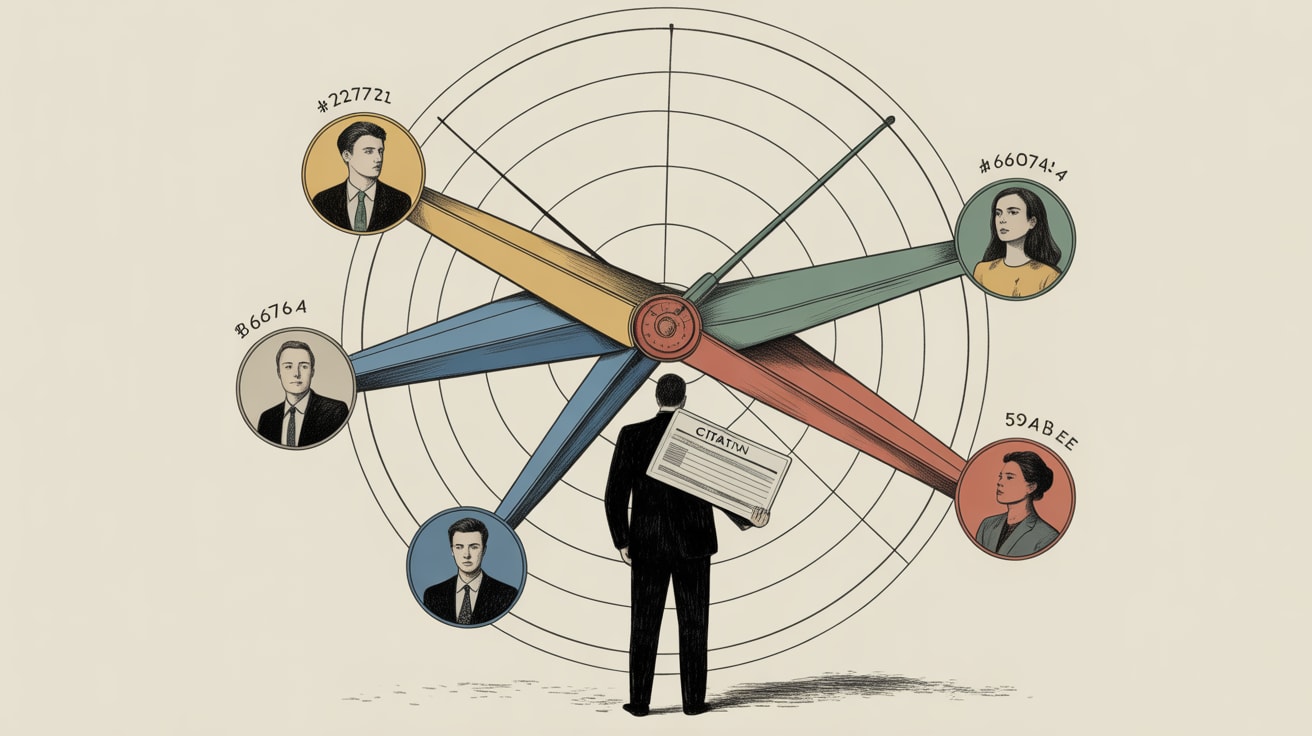
Ahrefs’ analysis of AI chatbot traffic patterns reveals a consistent signal: cited content tends to be specific, structured, and authoritative on a narrow topic. Broad, hedged, evergreen-for-the-sake-of-it content rarely earns citations. What does? Pieces that answer a discrete question with a clear stance, a concrete example, and a logical structure that an LLM can parse without ambiguity. Think of it as writing for a very smart, very impatient reader who will quote you directly or not at all. For brands operating across markets like Thailand, Vietnam, or the Philippines — where search queries increasingly mix English with local language — this means your authoritative content likely needs language-specific versions, not just translated copies. A Shopee seller FAQ written in Bahasa Indonesia with local pricing context will outperform a generic English equivalent in citation probability for that market’s AI-mediated queries.
Feeding the Machine Without Losing Your Voice
Moz’s Chima Mmeje, in a recent Whiteboard Friday, makes a point that practitioners often miss: the quality of AI-assisted content is directly proportional to the quality of your training inputs. Guardrails, brand voice documents, and specific factual source material fed into your prompts determine whether the output is genuinely useful or plausibly worded noise. The strategic implication extends beyond content production efficiency. If you want AI systems to cite you, you need to be the primary source — the original research, the proprietary data point, the named expert perspective — not the aggregator of what others have already published. For regional brands, this is actually a competitive opening: localised market data, category-specific consumer research, or platform behaviour insights specific to, say, LINE’s ecosystem in Thailand, are exactly the kind of source material that global AI models lack and will preferentially surface when they find it.
GEO Is an Infrastructure Problem, Not a Content Calendar Problem
Generative engine optimisation isn’t a content type — it’s a set of architectural decisions that compound over time. Three that matter immediately:
Schema and structured data are no longer optional. AI agents parse structured signals to validate factual claims. FAQ schema, HowTo schema, and Article schema with explicit author credentials all increase the probability that an agent treats your content as a citable source rather than background noise. Google’s Google-Agent introduction signals that the company is building infrastructure to distinguish citation-worthy content from indexed content — schema is part of that signal.
Topical authority over topical breadth. Ahrefs’ data consistently shows that sites earning AI chatbot referrals tend to own a narrow vertical deeply rather than covering a wide surface shallowly. If you’re a logistics brand in the Philippines, a definitive guide to last-mile delivery challenges in Luzon will earn more AI citations than a general supply chain overview. Depth is the moat.
Content freshness with a timestamp discipline. AI models are increasingly citation-date aware. Content that is clearly dated — with explicit publication and update timestamps, references to current platform versions, or recent data points — performs better in citation contexts than undated evergreen content. Semrush’s 2026 YouTube keyword research guide, for instance, explicitly frames guidance around 2026 platform behaviour, which increases its relevance window for AI retrieval.
The brands that will dominate AI-mediated search in Southeast Asia over the next 18 months are not the ones producing the most content. They’re the ones producing the most extractable content — specific, structured, locally grounded, and authored with a traceable point of view. The machines are learning to read. The question is whether you’re writing to be understood, or just to be found.
At grzzly, we work with growth teams across Southeast Asia to build search visibility strategies that account for both traditional SERP performance and emerging GEO signals. If your brand is trying to navigate the shift from ranking to citation — and what that means for your content architecture and regional market approach — we’d find that conversation worth having. Let’s talk
Sources

Written by
Cosmic GrizzlyMapping the evolving cosmos of search — from traditional SERP dominance to answer engine optimisation and AI-cited authority. Obsessed with how machines decide what the world deserves to read.