AI agents are building pipelines and writing SQL faster than ever — but speed without data governance is a liability. Here's what CDPs need to stay safe.
AI coding agents wrote, modified, and shipped more data infrastructure last quarter than most mid-size data teams produce in a year. That should excite you — and worry you in equal measure.
The Acceleration Problem in AI Data Pipelines
Monte Carlo’s Lior Gavish puts it plainly: Claude and Cursor can write SQL, scaffold pipelines, and alter schemas at a pace that would have been unimaginable 24 months ago. The problem isn’t capability — it’s accountability. Experienced data engineers carry operational instincts built from painful experience: the awareness that a schema change at 11pm can cascade into broken reports by 9am, that a pipeline touching PII needs a paper trail, that “works in staging” is not the same as “safe in production.”
AI agents have none of that scar tissue. They optimise for task completion, not downstream consequence. For teams building or maintaining a Customer Data Platform in Southeast Asia — where a single unified profile might stitch together LINE chat behaviour, Shopee purchase history, and offline transaction data from a POS system — an unchecked schema change isn’t a minor bug. It’s a broken identity graph that takes weeks to repair and silently corrupts segmentation in the interim.
What CDP Architecture Actually Needs from AI
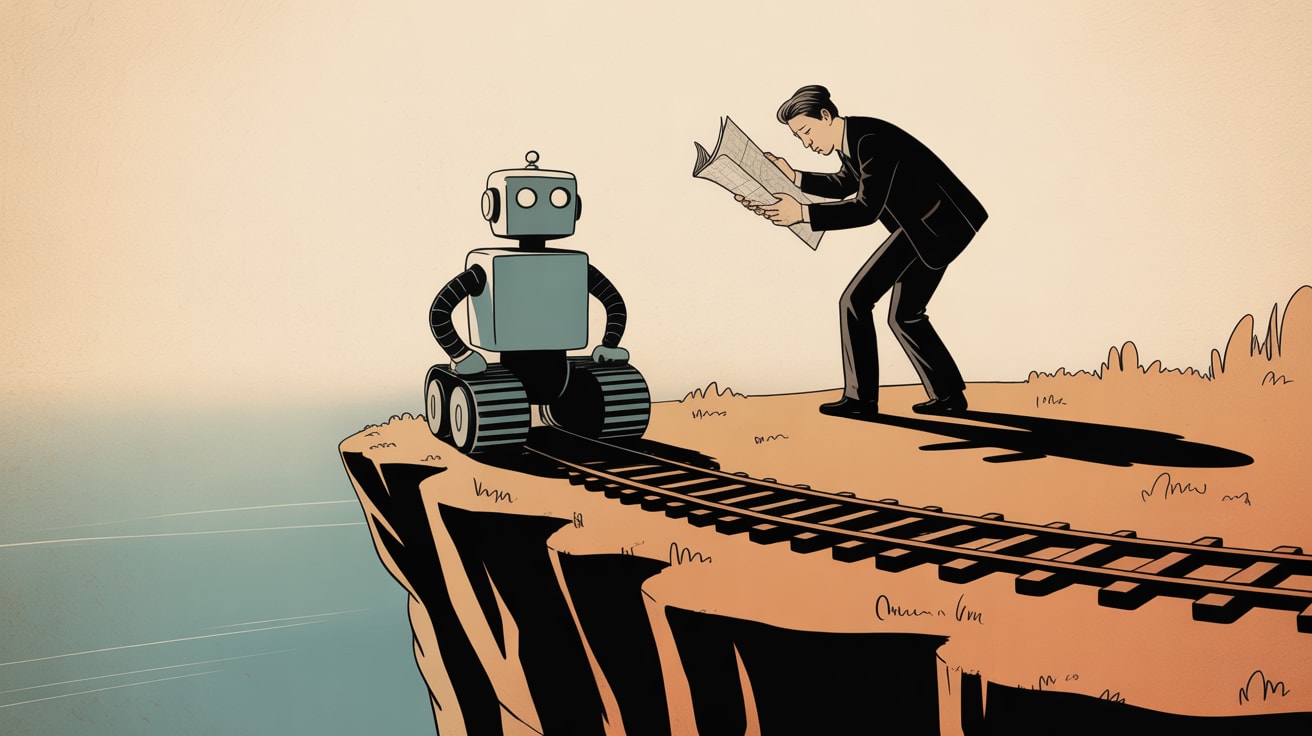
The honest answer isn’t to slow down AI adoption — it’s to constrain it intelligently. Think of it as giving your AI agent a sandbox with adult supervision baked in.
Practically, this means three things. First, treat schema changes as events, not edits — every AI-generated alteration to a data model should trigger a review workflow, not deploy directly. Tools like dbt’s state comparison or Monte Carlo’s lineage tracking can surface the blast radius of a change before it hits production. Second, enforce data contract testing at the pipeline boundary: if your CDP ingests a new behavioural feed from a Grab merchant integration, the contract between producer and consumer should be explicit and machine-verifiable, not implicit and discovered at failure. Third, restrict AI agent permissions by default — read access for exploration, write access only through a gated review layer.
This isn’t bureaucracy. It’s the difference between a CDP that earns its licence fee and one that generates a quarterly data quality incident report.
Real-Time Context Is the New Baseline — But the Data Has to Be Clean
CallRail’s Voice Assist integration with HubSpot illustrates what unified customer data looks like when it actually works: a caller is recognised instantly, their CRM history surfaces in real time, and the conversation adapts accordingly. For a regional brand running contact centre operations across Thailand, the Philippines, and Indonesia — each with different CRM data quality standards — that kind of real-time personalisation only holds up if the underlying profile data is trustworthy.
This is where the AI governance conversation loops back to CDP strategy. The closer you push toward real-time activation — whether that’s a voice agent pulling live context or a Shopee retargeting trigger firing within minutes of cart abandonment — the less tolerance you have for dirty data. A stale or corrupted customer profile doesn’t just produce a bad recommendation; in a voice interaction, it produces an actively confusing human moment. The personalisation that was supposed to build trust does the opposite.
For Southeast Asian markets specifically, multi-language and multi-platform data ingestion compounds the problem. A customer who browses in Thai on LINE, converts in English on a web checkout, and contacts support in Bahasa via WhatsApp will have identity fragments across at least three systems. An AI agent left to autonomously manage the pipeline joins between those sources can introduce matching logic errors that are nearly impossible to audit after the fact.
Building AI-Assisted Data Governance That Actually Scales
The most pragmatic framing I’ve seen is to treat AI coding agents the way you’d treat a very talented junior engineer on their first week: high output, genuine potential, zero institutional knowledge. You wouldn’t let them merge to main unsupervised. You’d pair them with someone who knows where the bodies are buried.
Concretely, that means designating a data governance owner — not a committee, a named person — who reviews AI-generated pipeline changes before promotion. It means building lineage documentation into your CI/CD pipeline so that every AI-authored transformation has a traceable origin. And it means running regular data quality audits against your CDP’s core identity resolution layer, not just your downstream activation outputs.
For teams at growth stage — where the temptation to move fast is highest and the governance infrastructure is thinnest — the minimum viable guardrail is a weekly data quality dashboard scoped to your most critical unified profile attributes: email match rate, cross-device identity confidence, consent status accuracy. If those three numbers are healthy, you have working foundations. If they’re drifting, no amount of AI-accelerated pipeline velocity will save your activation performance.
The real question for data leaders in 2026 isn’t whether to let AI touch your data infrastructure — that ship has sailed. It’s whether your governance architecture is mature enough to give AI the room to accelerate without the latitude to quietly break things at scale.
At grzzly, we help brands across Southeast Asia architect customer data platforms that are built for real-world complexity — multi-platform ingestion, identity resolution across fragmented touchpoints, and governance frameworks that hold up when AI gets involved. If your CDP is earning its licence fee, great. If you’re not sure, that uncertainty is worth a conversation. Let’s talk
Sources

Written by
Velvet GrizzlyArchitecting the unified customer profile — stitching together behavioural, transactional, and declared data into platforms that actually earn their licence fee.