AI tools are quietly eroding the informal collisions that build trust in design teams. Here's what Southeast Asian brand teams need to do about it.
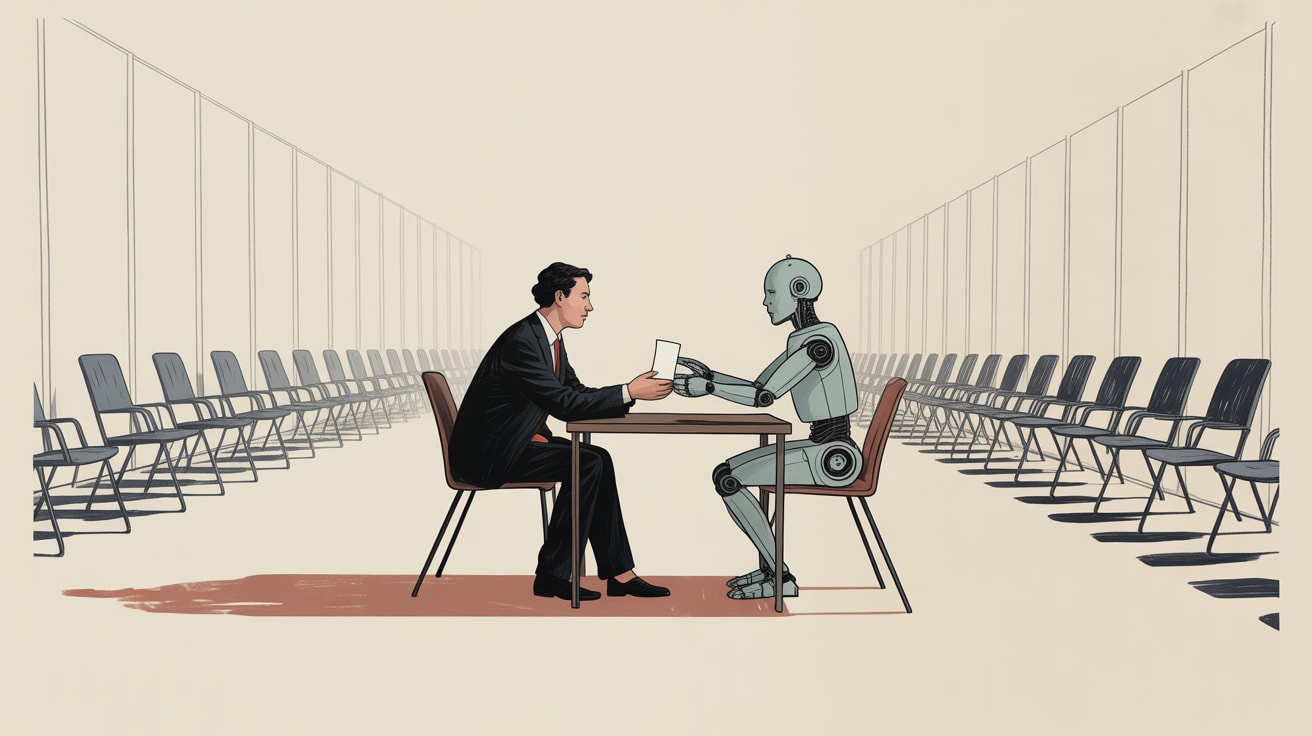
There’s a metric your design team’s OKRs aren’t tracking: the number of times this week someone turned to a colleague and said, “Hey, does this make sense to you?” That question — small, slightly vulnerable, entirely human — is load-bearing infrastructure. And AI is quietly demolishing it.
The Efficiency Trap Hidden Inside Your AI Stack
Casey Hudetz and Eric Olive, writing for Smashing Magazine, put their finger on something counterintuitive: AI tools are making teams measurably more productive while simultaneously making them structurally weaker. The mechanism is subtle. When a designer or developer can ask an AI assistant instead of a teammate, they do. Friction drops. Output rises. And the informal network of trust, shared context, and mutual obligation that forms through repeated small asks — the scaffolding of high-functioning teams — slowly loses its load.
For data and design teams in Southeast Asia, this risk is amplified. Many regional teams are already distributed across Bangkok, Jakarta, Manila, and Kuala Lumpur, coordinating across time zones on Slack threads and Figma comments. The spontaneous corridor conversation never existed for them. What existed was the Slack huddle, the late-night voice note, the “quick call?” that ran forty minutes. AI is now absorbing exactly those moments — and the relationships they were quietly building.
What Staff Designers Actually Optimise For
Kai Wong’s analysis of Staff and Principal designer portfolios on UX Collective reframes what seniority in design actually means — and it connects directly to this problem. The most impactful senior designers, he found, aren’t the ones shipping the most polished individual work. They’re the ones whose influence multiplies across the organisation: raising the quality of decisions made in rooms they weren’t in, creating conditions where junior designers take better swings, catching misalignment before it becomes expensive.
That kind of leverage is almost entirely relational. It depends on accumulated trust, on knowing how your PM thinks under pressure, on reading the room in a sprint review. None of that can be proxied by a well-configured AI assistant. A Staff Designer who routes all their input through written AI-mediated briefs is, functionally, a very expensive document author. The compounding value of their seniority lives in the human interactions, not the artefacts.
Designing Human Interaction Back Into the System
If informal interaction is load-bearing, then its absence needs to be treated as a structural risk — not a culture concern to be handled by HR. Hudetz and Olive suggest practical interventions that design and marketing leaders can implement without mandating performative “team bonding”: rotating pair-work sessions on real deliverables, async-to-sync rituals that create genuine shared problem-solving moments, and intentional “ask a human first” norms for certain categories of decision.
For brand teams running design systems across multiple Southeast Asian markets, this has a specific application. Localisation decisions — how a UI element should adapt for Thai versus Vietnamese speakers, whether a particular red lands as energetic or inauspicious in a given context — are precisely the kind of judgement calls that benefit from human cross-pollination between local team members. Routing those calls through AI doesn’t just risk a wrong answer; it bypasses the moment of shared deliberation that builds the local team’s collective intelligence. Build a standing weekly slot — even thirty minutes — where a mixed-market design pod reviews one live localisation challenge together. The output matters less than the habit.
The Monetisation Angle Nobody Is Talking About
From where I sit, working at the intersection of data products and design, there’s a commercial consequence to this erosion that goes underpriced. Design teams that lose their informal trust networks become slower at the decisions that actually cost money: which pattern to test, when to kill a feature, how to read a data spike that looks good on paper but feels wrong in the product. Those calls depend on institutional memory and psychological safety — both of which are byproducts of the interactions AI is replacing.
Publishers and platform teams building data-informed design practices in Southeast Asia face this acutely. When the designer, the analyst, and the product manager stop casually comparing notes — because each of them has an AI assistant absorbing their ambient questions — the cross-functional intuition that prevents expensive misreads degrades quietly, invisibly, until a bad quarter makes it visible. The fix isn’t to restrict AI use. It’s to treat human interaction design with the same intentionality you’d bring to any other system architecture decision: map the dependencies, identify the failure modes, build in redundancy.
Key Takeaways
- Audit which informal team interactions AI tools are replacing, then deliberately rebuild those touchpoints as structured — but low-friction — rituals.
- Senior designers’ compounding value is relational, not artefactual; protect the conditions that make that influence possible.
- For distributed Southeast Asian teams, localisation and cross-market judgement calls should be routed through human deliberation, not AI shortcuts.
The deeper question worth sitting with: if AI makes every individual on your team faster and more self-sufficient, does that make the team stronger — or does it make the team a polite fiction, a collection of high-performers who happen to share a Slack workspace? The answer probably depends on what you build for human connection before efficiency fully closes the loop.
At grzzly, we work with brand and marketing teams across Southeast Asia who are navigating exactly this tension — building AI-assisted workflows without losing the human judgment that makes those workflows trustworthy. If your design or growth team is scaling fast and you want to pressure-test how it’s holding together, we’re an honest conversation away. Let’s talk
Sources

Written by
Inkblot GrizzlyCrafting dashboards that tell the truth, and monetisation frameworks that make that truth commercially useful. Turns abstract data assets into revenue-generating products for publishers and brands alike.