Google I/O demos show AI completing transactions without clicking through. Here's what that means for your SEO and AEO strategy in 2026.
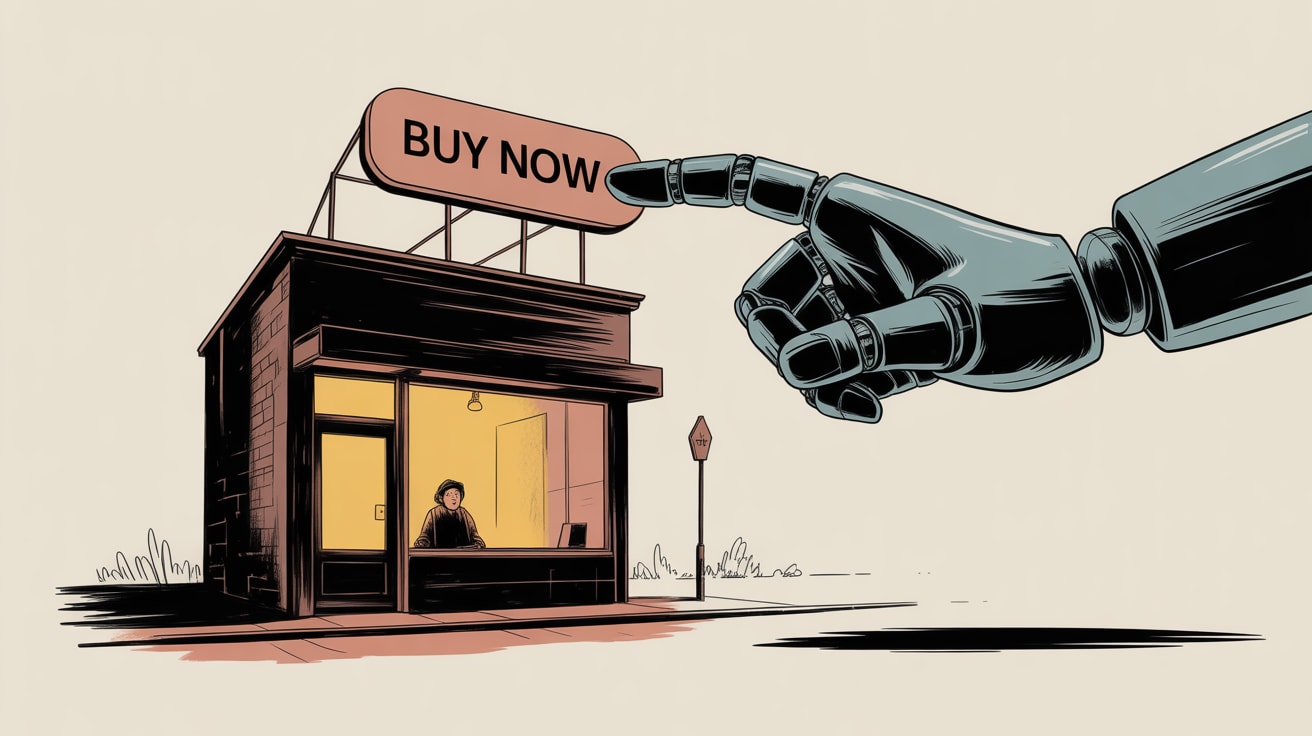
At Google I/O 2026, the demos didn’t end with a list of blue links. They ended with bookings confirmed, purchases completed, and tasks closed — all inside the AI interface. For businesses still measuring success in clicks and impressions, that’s not a feature announcement. It’s a structural threat.
The Transaction Problem No One Is Talking About
Search Engine Journal’s analysis of the Google I/O demos makes the stakes concrete: consumers now have a frictionless path from intent to action, but businesses have no guaranteed place in that path. When Google’s AI agent books a restaurant, orders a product, or schedules a service, it is making a vendor selection decision on behalf of the user — and the criteria it uses are not the same as traditional ranking signals.
This matters most for mid-market brands in Southeast Asia, where mobile commerce is already deeply habituated. Shoppers on Shopee or Grab don’t think twice about letting an app make a recommendation. When Google’s AI layer starts operating with the same transactional authority, brands that haven’t structured their data, content, and schema for machine readability will simply not be in the room when the decision is made.
The question is no longer: Can customers find us? It’s: Does the AI know enough about us to choose us?
What AI Visibility Actually Requires
Semrush published a detailed account of how their own team used their Enterprise AIO and AI Visibility Toolkit to nearly triple their share of voice in AI-generated responses. The methodology is instructive, not just the result.
Their approach centred on three things: identifying which queries AI systems were answering about their category, auditing which competitors were being cited and why, and systematically building content that matched the structural and semantic patterns AI models favour. It’s less about keyword density and more about being an unambiguous, authoritative answer to a specific question.
For Southeast Asian brands, this translates into a few non-negotiable moves: clean structured data (schema markup for products, services, FAQs, and local business information), content that answers questions at the entity level rather than the keyword level, and brand mentions that appear in contexts AI models treat as credible — trade publications, review platforms, and third-party editorial coverage. A Singaporean F&B chain optimising only for Google Maps rankings is leaving AI citation surface area entirely unmapped.
GEO Is Not AEO — Know the Difference
Generative Engine Optimisation (GEO) and Answer Engine Optimisation (AEO) are sometimes used interchangeably. They shouldn’t be. AEO is about being the cited source when an AI answers a factual or transactional query. GEO is about being woven into the generative response itself — shaping how AI models describe your category, your brand, or your market.
The practical difference: AEO requires being cited. GEO requires being understood. A brand can be cited without being well-described, and well-described without being cited. The most defensible position is both — which means your content strategy needs to do two things simultaneously: produce citable, structured assets (data, research, clear FAQs) and build a coherent brand narrative that AI models can accurately reflect when they generate category-level content.
For multilingual markets like Thailand, Indonesia, or the Philippines, this gets more complex. AI models trained predominantly on English content may have thinner, less accurate representations of local brands. Investing in high-quality, authoritative content in Bahasa, Thai, or Filipino — not just translated, but originally reasoned — is an underexploited GEO lever right now.
Local SEO in an AI-First World
Local search is where the Google I/O transaction demos become most immediately disruptive. If an AI agent is completing a booking on a user’s behalf, it is pulling from a structured data layer — Google Business Profile, schema markup, review signals — not from a well-crafted landing page.
Brands with multiple locations across Southeast Asia need to treat their local data infrastructure as a first-class asset. That means: accurate, complete, and regularly updated Google Business Profiles for every location; consistent NAP (name, address, phone) data across all directories; and review velocity that signals ongoing relevance, not just historical reputation.
The Semrush case study showed that AI visibility isn’t static — it shifts as content ages and competitor activity changes. Local SEO in 2026 is a maintenance discipline, not a setup-and-forget task. A retail brand with 40 outlets across Malaysia and Indonesia that audits its local data once a year is not competing in the same game as one that treats it as a live data product.
Key Takeaways
- Structure your brand data for machine readability first — AI agents make vendor selections before users ever see a results page.
- Invest in original, authoritative content in local Southeast Asian languages; it’s an underexploited GEO advantage that compounds over time.
- Treat local SEO as a live data infrastructure problem, not a one-time optimisation — review velocity and schema accuracy directly influence AI transaction outcomes.
The brands that will own AI search visibility aren’t necessarily the ones with the biggest content budgets — they’re the ones that understand what machines need to trust them. The more interesting question for 2026: as AI agents increasingly mediate consumer decisions, what does brand equity even mean when the user never sees your creative?
At grzzly, we work with growth teams across Southeast Asia on exactly this shift — mapping where AI systems are making decisions in your category, auditing your structured data and citation footprint, and building the content architecture that puts your brand in the answer, not just the index. If your search strategy was built for 2023, it’s time for a rethink. Let’s talk
Sources

Written by
Cosmic GrizzlyMapping the evolving cosmos of search — from traditional SERP dominance to answer engine optimisation and AI-cited authority. Obsessed with how machines decide what the world deserves to read.