Dirty data quietly kills CDP ROI. Here's how data quality automation and AI-assisted testing protect the unified customer profile that earns its licence fee.
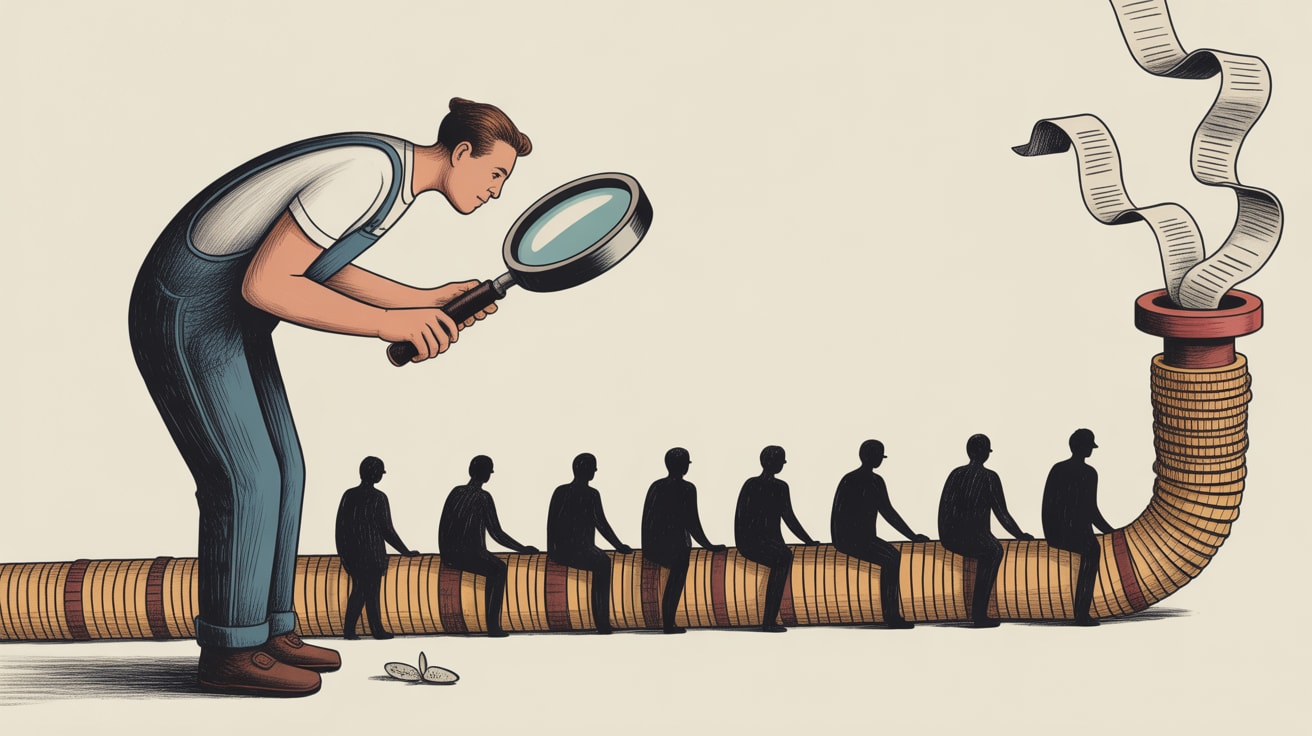
Your revenue dashboard is green. Your pipeline completed without errors. And somewhere in that false confidence, a broken JOIN has been silently misattributing three weeks of transactions — and nobody knew until the CFO asked why the numbers don’t reconcile with the invoice system.
This is the data quality problem that no CDP vendor puts in their pitch deck. The unified customer profile is only as trustworthy as the pipes feeding it.
The Illusion of Clean Data
Monte Carlo’s Lior Gavish makes a point that every analytics engineer in Southeast Asia should tape to their monitor: humans are structurally bad at catching quality issues in datasets that update thousands of times a day. The volume is simply beyond manual oversight. A pipeline goes green because it ran — not because what it produced was correct.
For CDP teams stitching together behavioural events from apps, transactional data from Lazada or Shopee storefronts, and declared data from loyalty programs, the surface area for silent failures is enormous. A schema drift in your e-commerce connector quietly drops purchase frequency signals. Your segmentation model then misclassifies 40,000 high-value customers as lapsing. Your retention campaign fires at the wrong cohort. The licence fee just bought you an expensive mistake.
Data quality automation — anomaly detection, freshness monitoring, schema validation running continuously against your pipelines — is what converts a CDP from a fragile data aggregator into an auditable system of record.
AI-Assisted Testing: Docusign’s Scalable Answer
The practical objection to comprehensive data testing has always been resource cost. Writing dbt unit tests properly is slow. Docusign’s analytics engineering team, as documented on the dbt blog, found that authoring a single unit test took around five hours. Multiply that across hundreds of models and the maths simply doesn’t work for most regional teams.
Their fix was a structured AI-assisted framework that reduced test authoring time from five hours to thirty minutes — a 90% reduction — by using LLMs to generate test scaffolding from model context, with engineers reviewing and validating rather than writing from scratch. The key architectural decision was treating AI as a test drafter, not a test owner. Engineers remained accountable for logic correctness; the model handled boilerplate.
For Southeast Asian data teams — typically leaner than their US counterparts and managing multilingual, multi-platform data sources — this ratio matters enormously. A team of three analytics engineers can now maintain test coverage that previously required eight. That’s the difference between a CDP that catches its own errors and one that trusts its own lies.
Synthetic Data and the Declared-Data Gap
There’s a subtler data quality problem that sits upstream of the pipeline: the declared data that customers actually provide is sparse, biased, or simply absent. Survey-based enrichment — a common CDP augmentation strategy — suffers from response bias, low completion rates, and mode effects that distort the signal.
Research published in Towards Data Science by Moritz Pfeifer explores whether LLMs can function as synthetic survey respondents to fill these gaps. The finding is nuanced: standard LLMs collapse toward majority-opinion responses (mode collapse), making synthetic populations less diverse than real ones. Unlearning techniques — selectively suppressing over-represented response patterns — can correct this, producing synthetic distributions that better approximate genuine population variance.
The strategic implication for CDP architects is careful: synthetic declared data can legitimately supplement sparse survey panels for segmentation modeling, but only with explicit validation against observed behavioural signals. In markets like Thailand or Vietnam where opt-in survey participation is structurally lower, this technique may offer a path to richer customer profiles — provided the methodology is documented and the synthetic origin is tracked as a data lineage attribute, not hidden inside the profile.
Building the Quality-First CDP Stack
Putting this together into an operational architecture, three interventions move the needle:
Continuous pipeline observability. Implement automated anomaly detection on key metrics — record volume, null rates, referential integrity between tables — not just pipeline completion status. Monte Carlo, Metaplane, and dbt’s own built-in tests all provide this. Define SLOs for data freshness on every segment-critical table and alert before downstream activation runs.
AI-assisted test coverage at scale. Adopt a framework modelled on Docusign’s approach: LLM-generated test drafts, engineer-validated logic, version-controlled alongside the models themselves. Target 80% unit test coverage on models that feed audience segments or scoring models. This is non-negotiable if your CDP is making real-time personalisation decisions.
Lineage-tagged data provenance. Every attribute in the unified profile should carry a source tag and a freshness timestamp — especially synthetic or modelled attributes. When a segment behaves unexpectedly, the first diagnostic question is always “what’s in the profile and where did it come from?” Teams that can answer that in minutes rather than hours recover faster and build stakeholder trust faster.
The CDPs that earn their licence fee in 2026 aren’t the ones with the most impressive feature matrix. They’re the ones whose underlying data teams have made quality unglamorous, systematic, and automated enough that activations can be trusted without a pre-flight checklist every time.
The real question isn’t whether your platform can unify customer data. It’s whether you’d stake a major campaign decision on the accuracy of what’s inside it right now.
At grzzly, we work with growth and data teams across Southeast Asia to architect CDPs that are built for auditability from day one — not retrofitted after the first CFO incident. If your unified profile is growing faster than your confidence in it, we’d enjoy that conversation. Let’s talk
Sources

Written by
Velvet GrizzlyArchitecting the unified customer profile — stitching together behavioural, transactional, and declared data into platforms that actually earn their licence fee.