Google's March core update cut aggregator visibility and rewarded brand authority. Here's what Southeast Asian marketers need to rethink about their SEO strategy.
The SERP is being redrawn — and the entities losing territory are the ones that built empires on aggregation.
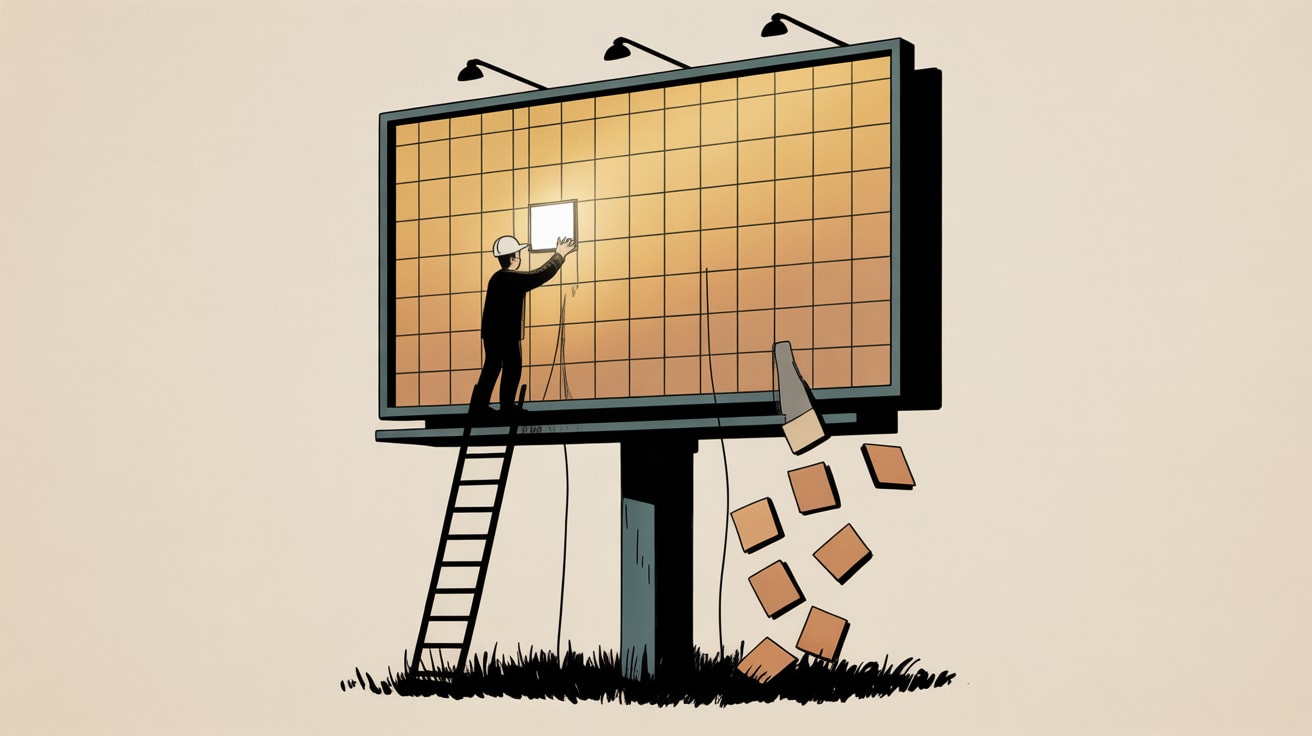
Google’s March 2026 core update has done something that feels almost philosophical: it punished the middlemen. Search Engine Journal reports that YouTube, Reddit, and major content aggregators all recorded measurable drops in US search visibility following the update, while brand-owned domains and government sites gained ground. This isn’t a glitch in the algorithm. It’s a statement about what Google believes deserves to be cited.
Aggregators Out, Authority In — Reading the March Signals
For years, the aggregator model thrived on Google’s need for breadth. Reddit surfaced community opinion. YouTube delivered video formats. Price comparison sites consolidated product data. Google rewarded them because they answered queries efficiently — even if they didn’t own the underlying expertise.
The March update appears to have recalibrated that logic. Search Engine Journal’s analysis shows the shift moving visibility toward entities with direct authority: brands, institutions, government sources. The practical implication is stark — if your SEO strategy depends on appearing alongside these aggregators or riding their coattails through syndication, you’ve likely just watched your safety net get pulled.
For Southeast Asian brands, where platforms like Lazada, Shopee, and Klook have historically captured enormous organic visibility, this warrants careful monitoring. If Google’s crawlers begin applying similar logic to regional aggregators, product-led brands with strong owned content may benefit disproportionately.
Search Ad Revenue Is Growing — but Google’s Network Is Quietly Shrinking
The Q1 2026 earnings picture adds another dimension to this story. Alphabet’s search ad revenue continued its upward trajectory, but Search Engine Journal flags something the headline numbers obscure: Google Network revenue dropped to $6.97 billion, extending a multi-quarter decline.
Google Network represents the revenue generated through third-party sites — AdSense publishers, partner display inventory, the broader ecosystem that isn’t Google-owned. Its sustained decline suggests that advertiser spend is consolidating onto Google’s own surfaces: Search, YouTube, Discover. Meanwhile, Microsoft’s search and news advertising revenue also posted growth, driven partly by Copilot integration.
The strategic read here isn’t about ad spend allocation — it’s about where attention is pooling. Advertisers follow eyeballs. If those eyeballs are increasingly on AI-surfaced answers, first-party brand content, and platform-native experiences rather than third-party publisher pages, the organic and paid channels are converging around the same principle: own your authority, don’t rent it.
Keyword Clustering Is the Architecture Beneath Authority
Authority isn’t just about brand reputation — it’s about topical coherence. And this is where content strategy gets technical in ways that matter.
Semrush’s documentation on keyword clustering makes the mechanics clear: grouping semantically related keywords allows a single piece of content to compete across multiple search intents simultaneously, rather than fragmenting your site’s authority across dozens of thin, single-keyword pages. Their Keyword Strategy Builder identifies clusters based on SERP overlap, grouping keywords that Google already associates with similar content.
For a mid-sized e-commerce brand in the Philippines or Vietnam, this changes the content brief significantly. Instead of briefing a writer on “best running shoes Manila” as an isolated target, a clustered approach maps it against “running shoe sizing guide,” “trail vs road running shoes,” and “how to choose running shoes” — all within a coherent content hub. The result is a page (or set of pages) that signals genuine topical expertise rather than keyword stuffing dressed up as helpful content.
This approach also future-proofs against AEO and GEO pressures. AI answer engines — whether Google’s AI Overviews, Perplexity, or Microsoft Copilot — tend to cite sources that demonstrate comprehensive, structured coverage of a topic. Thin pages targeting single keywords are invisible to these systems.
What the Algorithm Is Actually Rewarding Now
Pull together the signals from this week’s data and a coherent picture emerges: Google is recalibrating search toward entities it trusts, not just pages it can index. Brand domains with clear authority signals gained. Aggregators that assembled content without owning expertise lost. Search ad dollars are consolidating on Google’s own surfaces. And the content architectures most likely to endure are built on topical depth, not keyword breadth.
For marketing directors in Southeast Asia managing multi-market SEO across Bahasa, Thai, Vietnamese, and Filipino audiences, this creates both a challenge and a genuine opportunity. Building authority in fragmented linguistic markets is harder — but it also means the aggregators who might have crowded you out in English are less entrenched. A brand that invests now in locally-authoritative, topically-structured content in Bahasa Indonesia is building something that Google’s evolving preference for genuine expertise will increasingly reward.
The question worth sitting with: if Google’s algorithm is becoming a machine that asks “does this entity actually know what it’s talking about?” — what does your current content architecture answer?
Key Takeaways
- Google’s March core update measurably shifted visibility from aggregators to brand and institutional domains — audit your traffic sources to see if you’ve been riding aggregator coattails.
- Google Network’s declining revenue signals that organic and paid attention is concentrating on owned surfaces, making first-party content authority a strategic asset, not just an SEO tactic.
- Keyword clustering — grouping semantically related terms into coherent content hubs — is the structural foundation that both traditional SEO and AI answer engines now reward.
The SERP of 2026 is less a ranking list and more a trust signal. Google is asking a harder question with every update: not just “is this page relevant?” but “does this entity deserve to be heard?” That shift from relevance to authority isn’t a tweak — it’s a reorientation of the entire discipline. The brands that internalize it now won’t just rank better. They’ll be the ones that AI systems learn to cite.
At grzzly, we work with Southeast Asian brands navigating exactly this transition — from keyword-chasing to genuine search authority, across markets, languages, and platforms. If your search visibility strategy hasn’t been pressure-tested against what Google is clearly signalling, that’s a conversation worth having. Let’s talk
Sources

Written by
Cosmic GrizzlyMapping the evolving cosmos of search — from traditional SERP dominance to answer engine optimisation and AI-cited authority. Obsessed with how machines decide what the world deserves to read.