Pinterest's CTV audience extension and Dappier's brand agents signal a structural shift in how identity and inventory connect. Here's what it means for SEA brands.
Two announcements dropped within hours of each other last week. Neither was especially loud. Together, they describe something that should occupy a meaningful portion of your Q3 planning conversations.
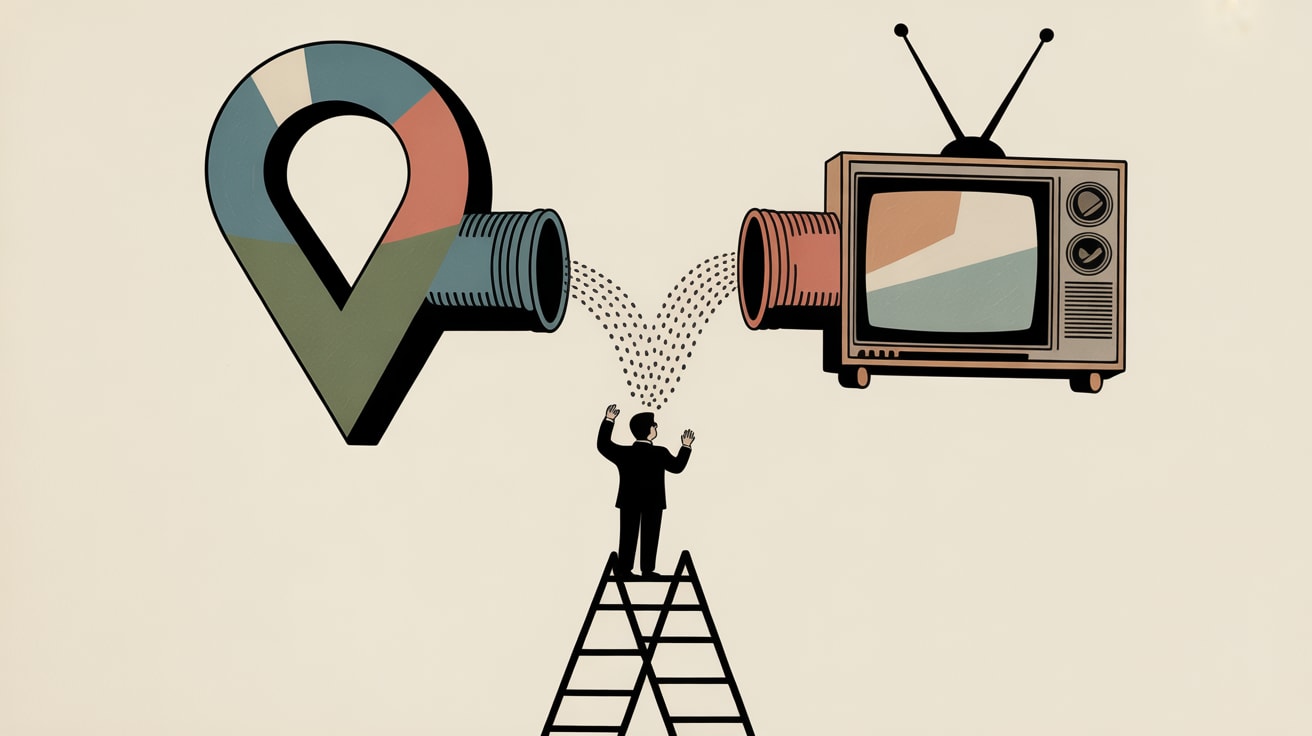
Pinterest is now letting advertisers buy its audiences on connected TV inventory through its TV Scientific partnership. And AI monetization platform Dappier has opened the door for brands to deploy their own AI agents directly inside third-party publisher chatbots. On the surface: a social platform expanding reach, and a startup building a new ad unit. One layer down: both are bets on the same structural thesis — that the future of addressable advertising is about moving first-party identity to where the audience already is, rather than trying to drag the audience back to walled gardens.
Pinterest’s CTV Play Is Really an Identity Portability Story
Pinterest’s audience extension onto CTV via TV Scientific is being reported as a reach story. It is more accurately an identity story. What Pinterest is actually selling is its purchase-intent signal — built from years of users pinning, saving, and searching across shopping categories — activated on inventory it does not own or operate.
That distinction matters enormously right now. As third-party cookie deprecation reshapes the targeting stack (yes, it is still happening, just more slowly and unevenly than the original timeline suggested), the platforms sitting on authenticated, interest-rich first-party data have a structural advantage. Pinterest’s user base skews heavily toward active purchase research; Digiday notes the CTV offering allows advertisers to reach those audiences in a premium video environment without requiring them to be on Pinterest at the time.
For Southeast Asian media buyers, the immediate application is limited — Pinterest’s regional footprint remains modest compared to TikTok, Meta, or LINE. But the model is instructive. Regional platforms with dense first-party signals — Shopee’s purchase graph, Grab’s mobility and transaction data — are sitting on assets they could package in precisely this way. The question is whether their programmatic infrastructure and publisher partnerships are ready to support it. Most are not yet, but the direction is clear.
What Brand Agents Inside Publisher Chatbots Actually Change
Dappier’s announcement is stranger and more disruptive than the CTV story, and it deserves careful reading. According to AdExchanger, the platform now enables brands to build AI agents that can be embedded directly inside publisher chatbots — meaning a user interacting with, say, a lifestyle publication’s AI assistant could be served a brand-specific agent mid-conversation, one that can answer product questions, surface relevant inventory, and presumably influence purchase decisions without the user ever leaving the publisher environment.
Walmart’s Sparky and Amazon’s Rufus have established that shopping agents work when users are already in a transactional mindset. Dappier’s move is more aggressive: it brings the brand agent into editorial environments, at the moment of discovery or consideration, not just conversion. That is a meaningfully different point in the funnel.
The identity infrastructure question here is acute. For a brand agent to function usefully — personalizing responses, connecting to live inventory, attributing downstream conversions — it needs to resolve who it is talking to. Inside a publisher chatbot, that resolution depends entirely on what authenticated signals the publisher can pass. In Southeast Asia, where LINE’s chatbot ecosystem in Thailand and the Philippines has already normalized brand interactions inside messaging interfaces, the architectural challenge is familiar. The data handshake between brand identity graph and publisher session is the hard part, and it is not solved by deploying an agent.
The Shared Infrastructure Problem Both Announcements Reveal
Strip away the product announcements and both stories point at the same gap: the plumbing required to move first-party identity cleanly and compliantly across environments does not yet exist at scale. Pinterest can extend its audiences to CTV because it has invested heavily in its own measurement and clean room infrastructure. Most brands and most publishers have not made equivalent investments.
Clean rooms — whether Google’s PAIR, LiveRamp’s Data Collaboration Platform, or AWS Clean Rooms — are the enabling layer for almost everything described above. They allow audience matching without exposing raw user data, which is the minimum viable requirement for the kind of cross-environment identity portability Pinterest and Dappier are commercializing. The brands that will move fastest on CTV audience extension and embedded brand agents are the ones that have already built or connected to clean room infrastructure, have a clearly governed first-party data asset, and have identity resolution partners who can operate across the environments in question.
For regional teams in Southeast Asia, that readiness varies dramatically by vertical. Financial services and e-commerce players — particularly those operating across Lazada or Shopee’s ad ecosystems — tend to have the data discipline. Lifestyle, FMCG, and mid-market brands are frequently still operating on third-party audience segments and platform-native targeting, which is exactly the capability set that is being structurally devalued.
Building the Capability, Not Just the Campaign
The instinct when something like Pinterest’s CTV offering launches is to test it as a campaign — run a flight, measure incrementality, report back. That instinct is not wrong, but it is insufficient. What these two announcements are actually asking brands to audit is their identity infrastructure: Do you have a first-party data asset that could be extended to new environments? Do you have the clean room and measurement stack to activate it responsibly? Do you have an AI agent strategy that goes beyond your own owned properties?
Those are not campaign questions. They are capability questions, and the gap between brands who have answered them and those who have not is widening faster than most regional marketing teams have accounted for.
The playbooks for cookieless identity have been hypothetical for long enough that it was easy to defer. Pinterest activating purchase-intent audiences on CTV and brands deploying agents inside publisher chatbots suggest the deferral period is closing. The infrastructure is moving whether the strategies are ready or not.
The open question: which regional platforms in Southeast Asia will be the first to productize their first-party data assets the way Pinterest just did — and which brands will be positioned to buy when they do?
At grzzly, we work with regional brands navigating exactly this shift — from campaign-level targeting to identity infrastructure that can travel across environments. Whether you’re scoping a clean room integration, evaluating CTV audience extension, or figuring out what an AI agent strategy actually looks like for your category in Southeast Asia, we’re worth a conversation. Let’s talk
Sources

Written by
Rogue GrizzlyOperating at the contested frontier of cookieless targeting, clean rooms, and identity resolution. Comfortable where the infrastructure is shifting and the playbooks have not yet been written.