RAG vs MCP isn't a rivalry — it's a recipe. Here's what Southeast Asian marketing teams need to understand about AI context and first-party data.
Brands across Southeast Asia are spending real money connecting AI to their marketing stacks. A lot of that money is being wasted because teams are confusing two things that were never in competition.
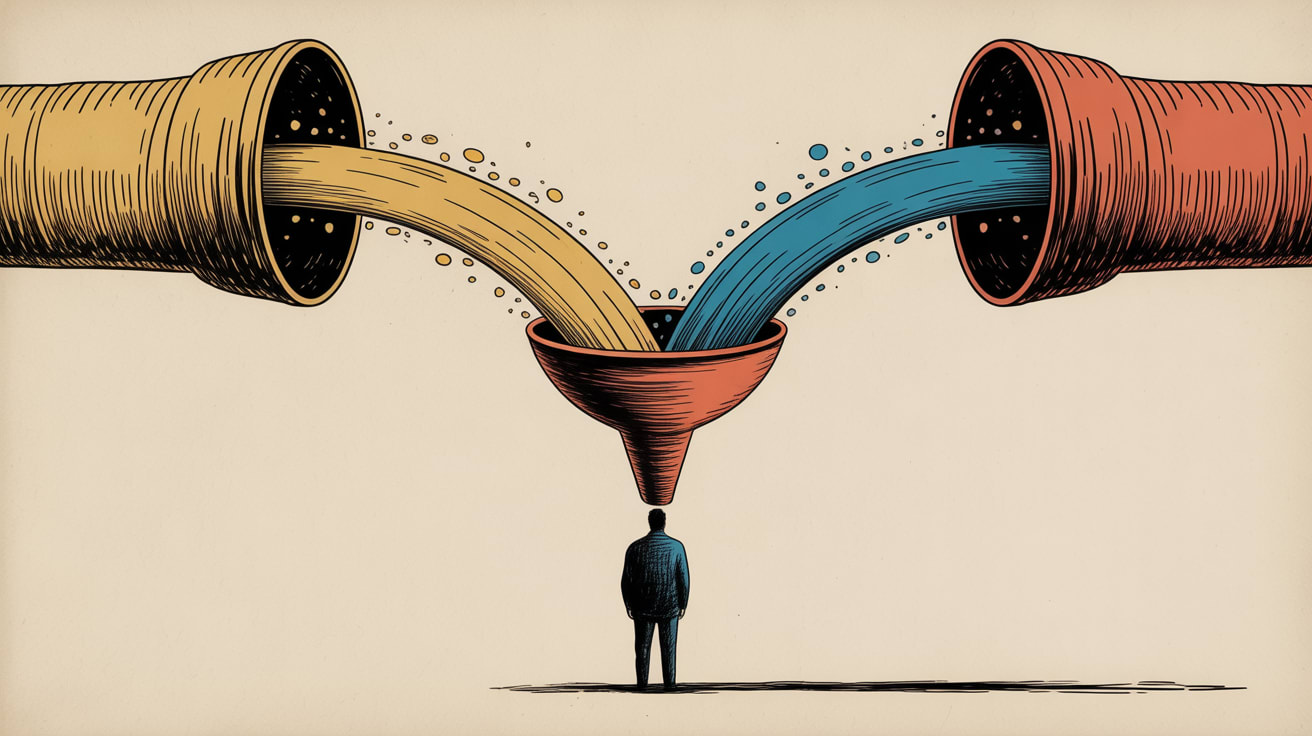
Every few months, the industry picks two technologies and frames them as rivals. Right now, it’s RAG versus MCP. Monte Carlo Data’s Lior Gavish puts it plainly: RAG (Retrieval-Augmented Generation) is a pattern for pulling relevant documents into an LLM at the moment of a query. MCP (Model Context Protocol) is a standardised way for AI models to connect to external tools and data sources. One is about what your AI reads before it answers. The other is about how your AI reaches out to fetch things in the first place. They’re not competing — they’re complementary layers in the same architecture.
The reason this distinction matters for marketing teams isn’t technical elegance. It’s that confusing the two produces the most dangerous kind of AI output: answers that sound authoritative but are built on the wrong foundation.
Why Context Quality Is the Actual Competitive Moat
Tialium’s Nick Albertini reaches back to Marcel Duchamp to make a point that lands harder than most AI think-pieces: context transforms meaning. Duchamp didn’t change the urinal. He changed the frame around it, and suddenly it became art. Your AI model is doing the same calculation every time it generates an output — it’s interpreting whatever sits inside its context window. The object (the model) hasn’t changed. The frame (your data) determines everything.
For a brand operating on Shopee or Lazada, that frame is your first-party data: purchase histories, loyalty programme signals, on-site behaviour, CRM attributes. If your RAG pipeline is pulling from generic product catalogues instead of consented, structured customer data, your personalisation engine is Duchamp’s urinal — but without the artistic intent. It’s just a urinal.
The brands that will pull ahead aren’t the ones with the most sophisticated models. They’re the ones who’ve built clean, consented, well-structured first-party data assets that can actually be retrieved meaningfully at query time.
RAG Without Clean Data Is an Expensive Way to Be Wrong
RAG’s promise is straightforward: instead of relying solely on what an LLM learned during training, you retrieve relevant documents at runtime and inject them into the prompt. For marketing applications — generating campaign copy, answering customer queries, producing audience segment briefs — this means your AI can reference current, specific, proprietary information rather than generalised knowledge from 18 months ago.
The catch is garbage-in, garbage-out applies with particular cruelty here. If your retrieval layer is pulling inconsistent product data, stale customer attributes, or consent-ambiguous signals, your LLM will synthesise those into fluent, confident, wrong outputs. A customer support bot trained on poorly-tagged CRM data in a market like Thailand or Vietnam — where a single customer may interact across LINE, a brand app, and a physical retail touchpoint — will hallucinate coherence that isn’t there.
The implementation priority before any RAG deployment: audit your data for completeness, recency, and consent provenance. In markets with evolving personal data protection legislation — Thailand’s PDPA, Indonesia’s PDP Law — consent provenance isn’t just good hygiene, it’s legal exposure management.
MCP Changes How AI Reaches Your Data — Not What It Finds There
If RAG is about what gets read, MCP is about how the AI gets access to read it. The Model Context Protocol standardises the handshake between an AI model and the external tools, APIs, and databases it needs to do useful work. Think of it as the plumbing that connects your AI to your martech stack — your CDP, your analytics platform, your CRM.
For Southeast Asian brands managing fragmented data environments across multiple platforms and markets, MCP’s standardisation is genuinely useful. Instead of custom integrations for every data source — a Grab purchase history here, a LINE engagement record there — MCP provides a consistent connection pattern. But standardising the connection does nothing to improve what’s on the other end of the pipe. A well-plumbed system delivering poor-quality, unconsented, or poorly-structured data is still a liability.
The practical implication: invest in MCP integration only once your underlying data assets are worth connecting. Building the highway before the destination exists is a common and expensive mistake in enterprise AI rollouts.
Building the Stack in the Right Order
For marketing teams looking to activate AI meaningfully against first-party data, the sequencing matters more than the technology choices:
-
Consent and data structure first. Your first-party data programme needs to be compliant by design — not retrofitted. In multilingual Southeast Asian markets, this means consent mechanisms that work in Bahasa, Thai, Vietnamese, and Tagalog, not just a translated English toggle.
-
RAG architecture second. Once you have clean, structured, consented data, design your retrieval layer around the specific marketing use cases you’re activating — campaign personalisation, content generation, customer query resolution. Each use case needs a different retrieval strategy.
-
MCP integration third. When your data assets are worth connecting and your retrieval patterns are defined, use MCP to standardise how your AI models reach them — and to make it easier to add new data sources as your programme matures.
The brands that will extract durable advantage from AI aren’t the ones who moved fastest. They’re the ones who built the foundation correctly and then moved with confidence.
Key Takeaways
- RAG and MCP solve different problems in the same stack — treating them as rivals leads to architectural decisions that undermine both.
- The quality of your first-party data, not the sophistication of your model, determines whether AI outputs are useful or credibly wrong.
- In Southeast Asian markets with active data protection legislation, consent provenance is a prerequisite for RAG deployment, not an afterthought.
As AI tooling standardises and model performance converges, the lasting differentiator will be the data assets brands have built trust around — with their customers, their regulators, and their own internal teams. The question worth sitting with: if you connected your current first-party data to a well-architected RAG system tomorrow, would you be proud of what it knows?
At grzzly, we help brands across Southeast Asia build first-party data programmes that are worth connecting to — consented, structured, and designed to power the AI activations that actually move metrics. If you’re building out your data architecture or questioning whether your current stack is ready for serious AI deployment, we’d enjoy that conversation. Let’s talk
Sources

Written by
Lavender GrizzlyTurning privacy constraints into competitive advantage. Builds first-party data programmes that are compliant by design, valuable by intent, and trusted by the people whose data they hold.