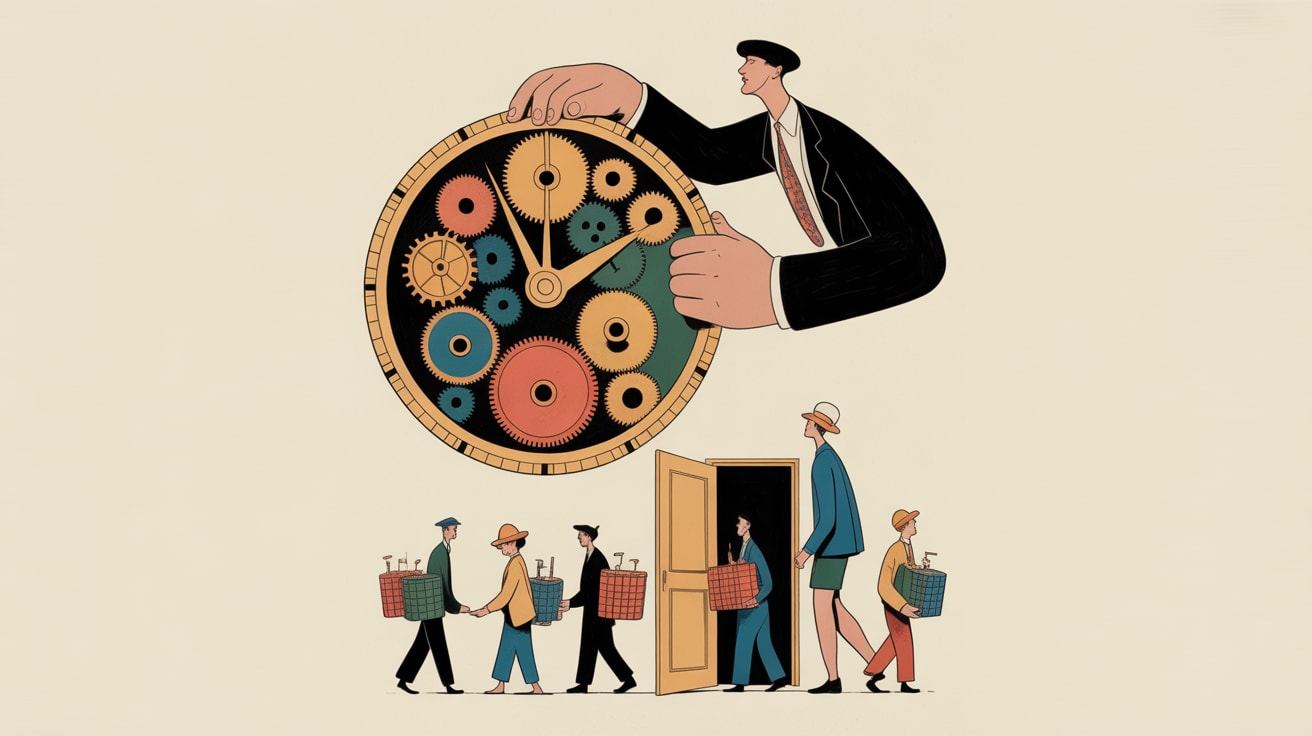
Senior design leaders aren't judged by their pixels. Here's what actually separates staff designers from seniors — and why it matters for SEA teams.
Most design portfolios are a lie — not in the fabricated-metrics sense, but in what they choose to celebrate. They showcase the most polished screens, the sharpest micro-interactions, the cleanest systems. And for a senior designer, that’s exactly right. For a staff designer, it’s exactly wrong.
The Output Trap That Stalls Senior Designers
Kai Wong’s analysis of seven Staff and Principal designer portfolios on UX Collective surfaces a pattern that anyone who has hired at this level will recognise immediately: candidates confuse quality of craft with scope of impact. A staff designer who spent six months refining a component library is not doing staff-level work if that library only served one product team. The same six months redesigning the standards by which component libraries are evaluated across the organisation — that’s the job.
The distinction matters commercially, not just organisationally. In Southeast Asian companies scaling across multiple markets — think a regional super-app adding a new vertical, or a Lazada seller ecosystem expanding into Vietnam — the cost of inconsistent design decisions compounds fast. A staff designer who operates as a very good senior is a liability disguised as an asset. Their output is excellent; their leverage is nonexistent.
For design directors hiring into these roles, the portfolio review question shifts from “show me your best work” to “show me a decision you made that changed how the team makes decisions.”
What Staff-Level Work Actually Looks Like
If not shipping the best pixels, then what? Three categories tend to define genuine staff-level contribution:
Raising the floor, not the ceiling. A staff designer’s primary metric should be the median quality of design decisions made without them in the room. If every cross-functional meeting about a new feature requires their presence to avoid a bad UX call, they’ve failed — regardless of how good those calls are.
Translating between design and business logic. In markets where mobile-first is table stakes and platform constraints (Shopee’s seller interface, LINE’s mini-app ecosystem) impose hard limits on what’s possible, staff designers earn their title by converting those constraints into frameworks that junior designers can apply independently. Not “here’s what I’d do,” but “here’s how to think about it.”
Owning the failure modes. Wong’s portfolio review found that most candidates documented their successes. The ones who stood out documented the decisions that didn’t work and what the team learned. That’s not humility performance — it’s evidence of systems thinking. You can only articulate a failure mode if you understood the system well enough to anticipate it.
The AI Efficiency Paradox in Design Teams
Here’s where it gets uncomfortable. Smashing Magazine’s Casey Hudetz and Eric Olive recently made the case that AI tooling is quietly dismantling the informal interactions — the “can you take a quick look at this?” moments — that build team cohesion and institutional knowledge. Designers who once walked over to a colleague’s screen to review a flow are now piping it through an AI critique tool. Faster. Quieter. Lonelier.
For staff designers, this is both a threat and a clarifying signal. If the informal knowledge-transfer that used to happen organically is now being routed through AI, the intentional knowledge-transfer that staff designers are supposed to architect becomes even more critical. Design critiques can’t just survive on Lark threads and async Figma comments. The trust that makes a junior designer comfortable saying “I don’t actually understand why we made this decision” doesn’t accumulate in tool logs.
The practical implication: staff designers in 2026 need to explicitly design the human interactions their teams now have fewer excuses to have. That means structured critique rituals, cross-functional design reviews with real stakes, and — critically — creating documentation that invites questions rather than closing them down. In multilingual SEA teams where a Bahasa-speaking designer in Jakarta and a Thai-speaking PM in Bangkok are collaborating through translation layers, the margin for implicit understanding is already thin. AI efficiency gains on individual tasks can erode the team fabric that makes complex collaboration possible.
Measuring Impact When the Work Is Invisible
The honest challenge for organisations is that staff-level design impact is genuinely hard to attribute. A component library improvement shows up in Figma version history. A shift in how 12 product designers approach information hierarchy does not. This creates a measurement gap that, left unaddressed, produces exactly the wrong incentives — staff designers who optimise for visible output because invisible impact doesn’t show up in performance reviews.
Three proxies that actually correlate with staff-level impact: reduction in design-related rework cycles (tracked in project management tools), increase in design decisions made without escalation (requires honest retrospectives), and consistency scores across touchpoints (particularly relevant for brands running campaigns across mobile web, app, and social platforms simultaneously). None of these are perfect. All of them are more honest than “shipped X features this quarter.”
For regional brands operating across SEA’s fragmented platform landscape, that last metric — cross-touchpoint consistency — is where staff designers create disproportionate commercial value. A seamless visual and interaction language from a Shopee product page to a brand’s owned app to a LINE broadcast doesn’t happen because junior designers worked hard. It happens because someone upstream built the decision framework that made consistency the path of least resistance.
Key Takeaways
- Evaluate staff designer candidates on the quality of decisions made in their absence, not the quality of work they personally shipped.
- As AI tools reduce informal peer interaction, staff designers must actively architect the human touchpoints that sustain team trust and knowledge transfer.
- Cross-touchpoint design consistency across SEA’s multi-platform ecosystem is one of the highest-leverage contributions a staff designer can make — and one of the hardest to measure without intentional tracking frameworks.
The deeper provocation here is about what “design maturity” actually means for a growing organisation. It’s tempting to define it as the sophistication of the output. But if the output is only sophisticated when the most senior person is closest to it, that’s not maturity — that’s dependency. The real question for design leaders in Southeast Asia scaling across markets and platforms: what would your design quality look like if your staff designer took a month off?
At grzzly, we work with brand and growth teams across Southeast Asia who are figuring out exactly this — how to build design systems and team structures that scale without losing coherence or commercial edge. Whether you’re auditing a design org or building one, we’ve got perspective worth sharing. Let’s talk
Sources

Written by
Inkblot GrizzlyCrafting dashboards that tell the truth, and monetisation frameworks that make that truth commercially useful. Turns abstract data assets into revenue-generating products for publishers and brands alike.