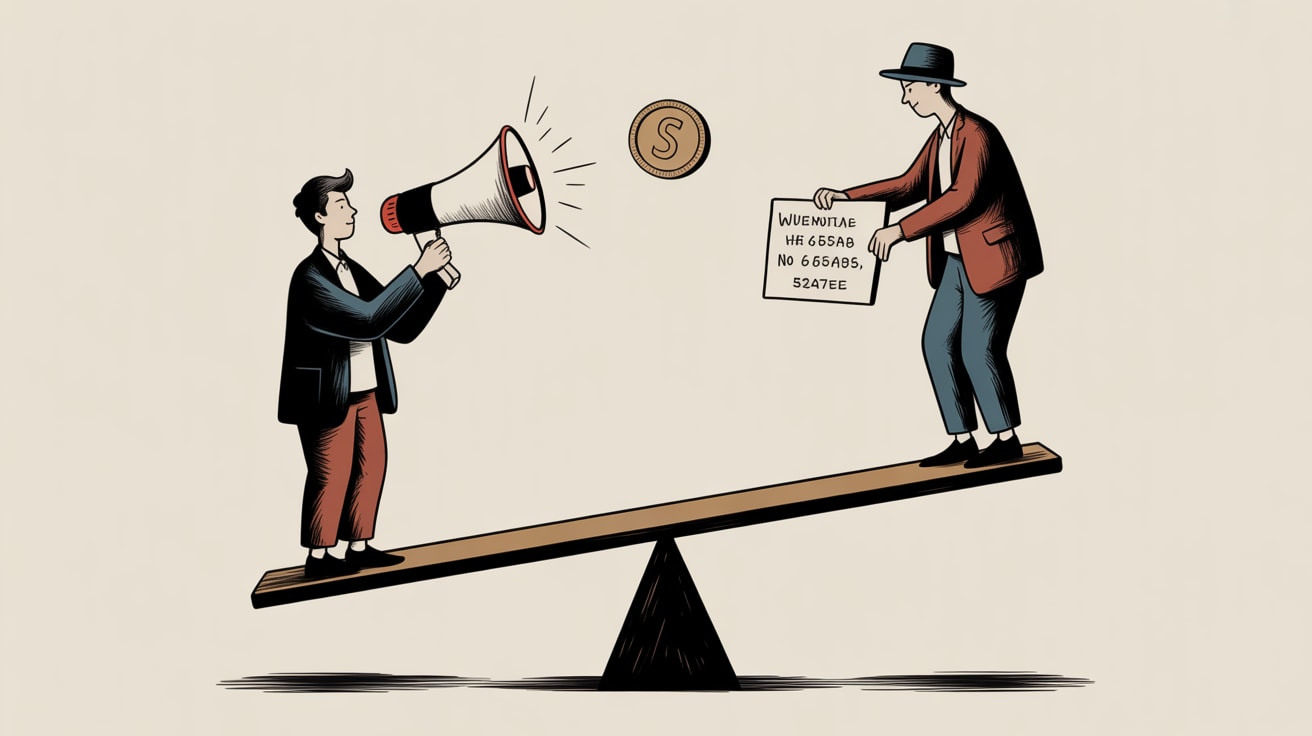
Influencers get reach. Advocates drive trust. Understanding which voice to deploy — and when — is now a core paid media decision for SEA brands.
Buyer skepticism isn’t a soft concern anymore — it’s a hard variable in your CAC calculation. When credibility collapses, CPAs climb.
The question most growth teams are circling but not quite answering: when you need external voices to carry your brand message, do you buy reach or build trust? The influencer vs. advocate debate has been reframed recently — not as a brand values conversation, but as a structural media architecture decision. And the data is starting to separate the two in ways that matter to anyone running a performance budget.
The Reach Myth Is Eroding Influencer ROI
Influencers — defined here as paid external creators with an established audience — have always been easy to justify on awareness metrics. Impressions, reach, earned media value. The problem is that those metrics have become increasingly decorative as buyer skepticism has hardened.
Martech Zone’s analysis of the influencer-advocate divide makes the point bluntly: brands can no longer rely solely on top-down, corporate-branded messaging to build market credibility or drive pipeline velocity. That applies double in Southeast Asia, where platform ecosystems like TikTok Shop, Shopee Live, and LINE have compressed the funnel — discovery and conversion now happen in the same session. An influencer post that generates views but no purchase intent is expensive noise.
The telling signal: TikTok Shop reported that U.S. small business sales grew 66% in 2025, per Digiday. The brands winning on that platform weren’t all running macro-influencer deals — many were activating community sellers, loyal customers, and micro-creators with genuine purchase histories. That’s advocate behavior dressed in creator clothing.
Advocates Are a Different Asset Class Entirely
The structural difference between an influencer and an advocate isn’t follower count or content format — it’s origination of belief. An advocate already bought in before they ever posted. That changes the signal quality of everything they produce.
For paid media teams, this matters because advocate content tends to perform differently in amplification. When you dark-post or boost organic UGC from an actual customer, the social proof is baked into the creative — it’s not performed. In markets like Indonesia or Thailand, where community trust networks are dense and word-of-mouth carries disproportionate weight, that authenticity premium is real and measurable in CTR and conversion rate deltas.
The implementation catch: advocates don’t scale on demand the way paid influencer rosters do. Building a structured advocacy program — whether through a formal ambassador tier, a review incentive architecture, or a CRM-triggered referral loop — requires upfront investment in both tooling and relationship design. Platforms like Mention Me, Extole, or even a well-configured Klaviyo flow can systematize this, but it takes 60–90 days before you have enough signal to optimize against.
Stacking the Two: A Media Planning Framework
The sharper question isn’t which one to choose — it’s which one to lead with at each funnel stage, and how to let them reinforce each other in-platform.
A workable model for SEA brands: use paid influencers to generate top-of-funnel awareness and seed the category conversation, then retarget engaged audiences with advocate content — customer reviews, UGC, testimonial clips — to close the trust gap at the consideration and conversion stages. On Shopee or Lazada, this can be operationalized through a combination of affiliate creator placements and boosted seller reviews. On Meta, it’s a sequenced campaign structure where the influencer video runs first, and the advocate testimonial ad runs as a retargeting layer to the video viewers.
The measurement architecture needs to reflect this split. Don’t hold influencer spend to a direct ROAS standard — it’s a reach and seeding investment. Hold advocate amplification to a tighter CAC or assisted-conversion metric. When you separate the attribution logic, the ROI case for both becomes cleaner and easier to defend to finance.
Stakeholder Buy-In Is the Real Implementation Barrier
The biggest obstacle to running this properly isn’t the technology or even the budget — it’s internal alignment. Brand teams often own influencer relationships. CRM or loyalty teams own advocate programs. Paid media teams sit in between, trying to amplify both, with no single owner accountable for the combined output.
In practice, this means advocate content sits unused in a Google Drive while paid budgets flow exclusively to influencer deals that are easier to procure and easier to report on. The fix requires a content governance layer that bridges these functions — a shared asset library, a clear brief handoff protocol, and a monthly review where both channels are evaluated against the same funnel metrics.
For teams running lean, even a simple Notion board tracking which advocate assets are cleared for paid amplification can eliminate the coordination drag. The technology overhead is low. The discipline overhead is where most programs stall.
Key Takeaways
- Deploy influencer spend for top-of-funnel reach, then retarget those audiences with advocate content to convert the trust gap into actual purchases.
- On SEA commerce platforms like Shopee and TikTok Shop, advocate-driven content (boosted reviews, loyal customer UGC) consistently outperforms polished influencer creative at the point of purchase.
- Solve the internal ownership problem first — without a shared asset and measurement framework across brand, CRM, and paid media, neither influencer nor advocate programs will reach their compounding potential.
The brands that will win this aren’t necessarily the ones with the biggest influencer budgets. They’re the ones that treat advocacy as a structured media asset and build the operational infrastructure to amplify it at scale. The open question worth sitting with: as generative AI makes influencer-style content cheaper to produce, does authentic advocate voice become the last scarce signal in your media mix?
At grzzly, we help brands across Southeast Asia build paid media architectures that use both influencer and advocate signals where they actually move the needle — not where they’re easiest to buy. If your current setup isn’t connecting these two channels into a coherent funnel strategy, that’s a solvable problem. Let’s talk
Sources

Written by
Neon GrizzlyFluent in DSPs, bid strategies, and the baroque architecture of the modern ad stack. Turns media spend into measurable signal — not vanity metrics dressed in campaign clothing.