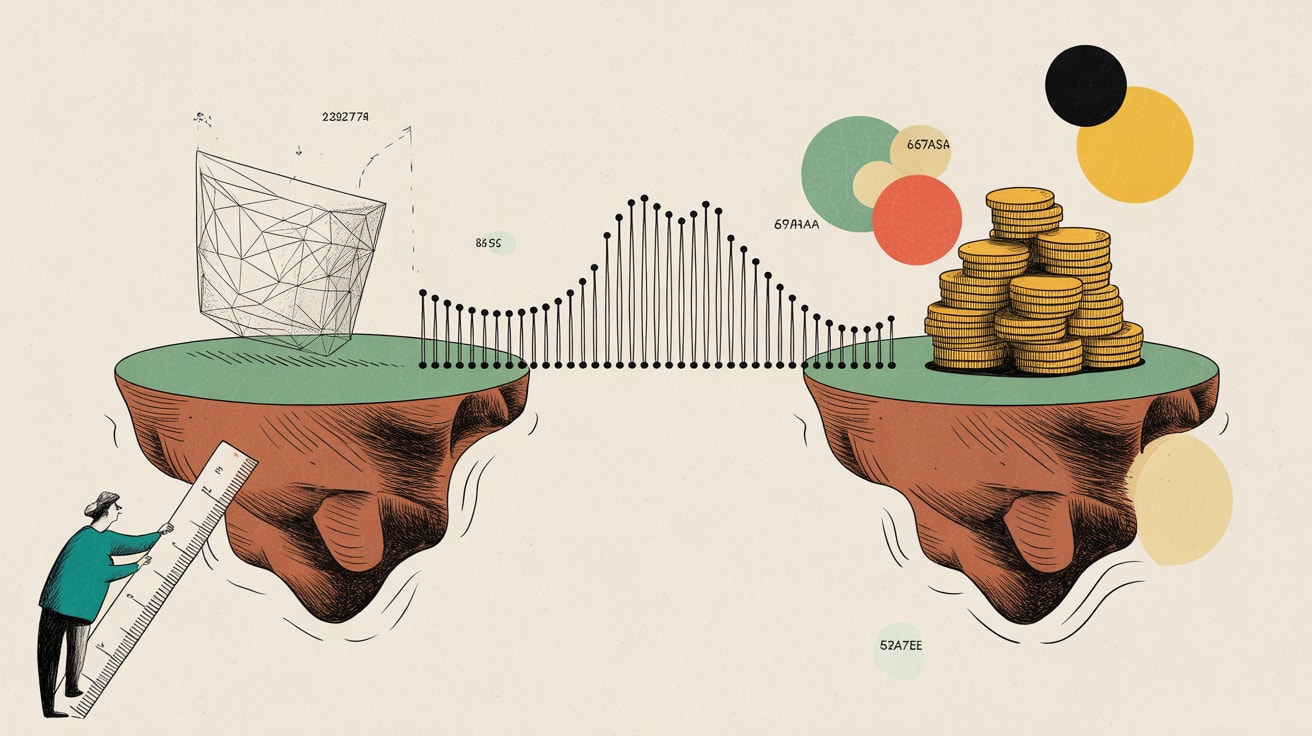
Ten data-backed truths link UX directly to revenue and retention. Here's how smart design teams in Southeast Asia can make the business case stick.
Every second of friction has a price tag. Most marketing teams just haven’t bothered to calculate it — which is why design budgets get cut and conversion problems get blamed on the media mix.
The Business Case for UX Has Finally Got the Numbers It Deserves
Smashing Magazine’s Carrie Webster recently compiled ten data-backed truths connecting UX quality directly to revenue, retention, and long-term growth. The details matter here. We’re not talking about vague correlations between “good design” and brand sentiment — we’re talking about friction events that show up in churn curves and cart abandonment rates.
The strategic implication for Southeast Asian brands is sharper than it looks. In a region where mobile commerce on Shopee and Lazada drives the majority of transaction volume, a 300-millisecond load delay or an ambiguous CTA placement isn’t a design oversight — it’s a measurable revenue leak. When you can model that leak against your GMV, the conversation with your CFO changes entirely. UX stops being a creative line item and becomes a yield optimisation problem. That’s a much easier budget conversation.
The practical starting point: instrument your funnel by step, not just by session. Micro-abandonment data between checkout stages reveals exactly where friction is costing you money — and gives your design team a prioritised brief rather than a mandate to “improve the experience.”
Lean Design System Teams Punch Well Above Their Headcount
NN/g’s Huei-Hsin Wang makes a case that small, strategically structured design system teams don’t just survive — they outperform bloated ones on speed and consistency. The key variable isn’t team size; it’s decision-making clarity. Lean teams with sharp prioritisation frameworks can ship component updates faster, maintain tighter consistency across touchpoints, and avoid the coordination overhead that kills velocity in larger orgs.
For regional brands managing interfaces across multiple markets and languages — think dual-language product pages for Thai and English, or right-to-left text support for certain audiences — a well-documented design system isn’t a luxury. It’s the only realistic way to maintain visual and functional consistency without rebuilding from scratch every time a new market or campaign type comes online.
The failure mode to watch: lean teams become bottlenecks when they don’t publish clear contribution guidelines for product and marketing squads. If designers are the only people who can add to the system, the system becomes a constraint rather than an accelerant. Define who can propose, who can approve, and what the review SLA looks like — before the backlog builds.
Documenting Design Intent Is a Data Hygiene Problem in Disguise
Lisa Demchenko’s piece on writing DESIGN.md files for AI systems like Claude surfaced something that resonates beyond the AI tooling angle. The core argument: design decisions are institutional knowledge, and most teams document the output (the component, the screen) but not the reasoning (why this pattern, why this constraint, what it’s optimising for).
From a data activation standpoint, this is a familiar problem. The same way undocumented data pipelines create downstream chaos when a model gets retrained or a segment definition shifts, undocumented design logic creates chaos when a new platform, campaign type, or AI assistant needs to apply brand standards at scale. The DESIGN.md framework — a structured narrative file describing product context, design principles, and known constraints — is essentially a feature store for your design system. It makes your intent portable and machine-readable.
Practical implementation for Southeast Asian teams operating across formats: build your DESIGN.md equivalent to address platform-specific constraints explicitly. What does your component library do differently on LINE OA versus a web landing page? What are the non-negotiable brand signals that must survive a Grab in-app ad unit? If you can’t answer those in writing, your design system is already inconsistent — you just haven’t measured it yet.
Connecting Design Metrics to the Data Stack
The missing link in most UX ROI conversations is instrumentation. You can cite all the industry benchmarks you like, but the ones that move internal decision-making are the ones tied to your own data. That means tagging design-adjacent events — scroll depth, tap target accuracy on mobile, form field error rates — with the same rigour you apply to paid media events.
Brands on Shopee Mall, for instance, have access to in-platform analytics that can be triangulated against design changes to measure lift. A/B testing a simplified checkout flow isn’t just a product team exercise — it’s a controlled experiment with a revenue outcome. When design changes are treated as experiments with hypotheses and measurement plans, they generate the kind of evidence that survives a quarterly budget review.
The tooling is accessible: most mid-tier analytics stacks can capture the micro-events that reveal UX friction. The gap is usually process — someone needs to own the connection between the design brief and the measurement plan before a change ships, not after.
Key Takeaways
- Instrument your funnel at the micro-event level to convert UX friction into revenue figures your finance team will actually act on.
- Design system investment pays off fastest when contribution guidelines are clear — lean teams scale impact through enablement, not gatekeeping.
- Treat design changes as instrumented experiments: a hypothesis, a measurement plan, and a defined success metric before anything ships.
The deeper question worth sitting with: if your design decisions are already being applied by AI tools — in ad copy generation, in dynamic creative optimisation, in chatbot UI — then how much of your competitive moat actually lives in undocumented designer intuition? The brands that systematise their design reasoning now will have a meaningful advantage when AI-assisted production becomes the default. The ones that don’t will keep rebuilding from scratch.
At grzzly, we work with marketing and growth teams across Southeast Asia to connect design decisions to measurable business outcomes — bridging the gap between what your design system says and what your data stack actually captures. If you’re trying to make the UX investment case internally, or build the instrumentation to prove it, we’re good at exactly that kind of problem. Let’s talk
Sources
- https://smashingmagazine.com/2026/05/data-backed-truths-user-experience-roi/
- https://www.nngroup.com/articles/lean-design-system-teams/?utm_source=rss&utm_medium=feed&utm_campaign=rss-syndication
- https://uxdesign.cc/how-to-write-a-design-md-file-claude-can-actually-use-2d89d183f823?source=rss----138adf9c44c---4

Written by
Mellow GrizzlyTranslating raw data into activated audience segments, predictive models, and decisioning logic. Comfortable at the intersection of the data warehouse and the campaign manager.