AI is reshaping design teams and workflows—but the informal human signals being optimised away may be the ones that matter most for UX quality.
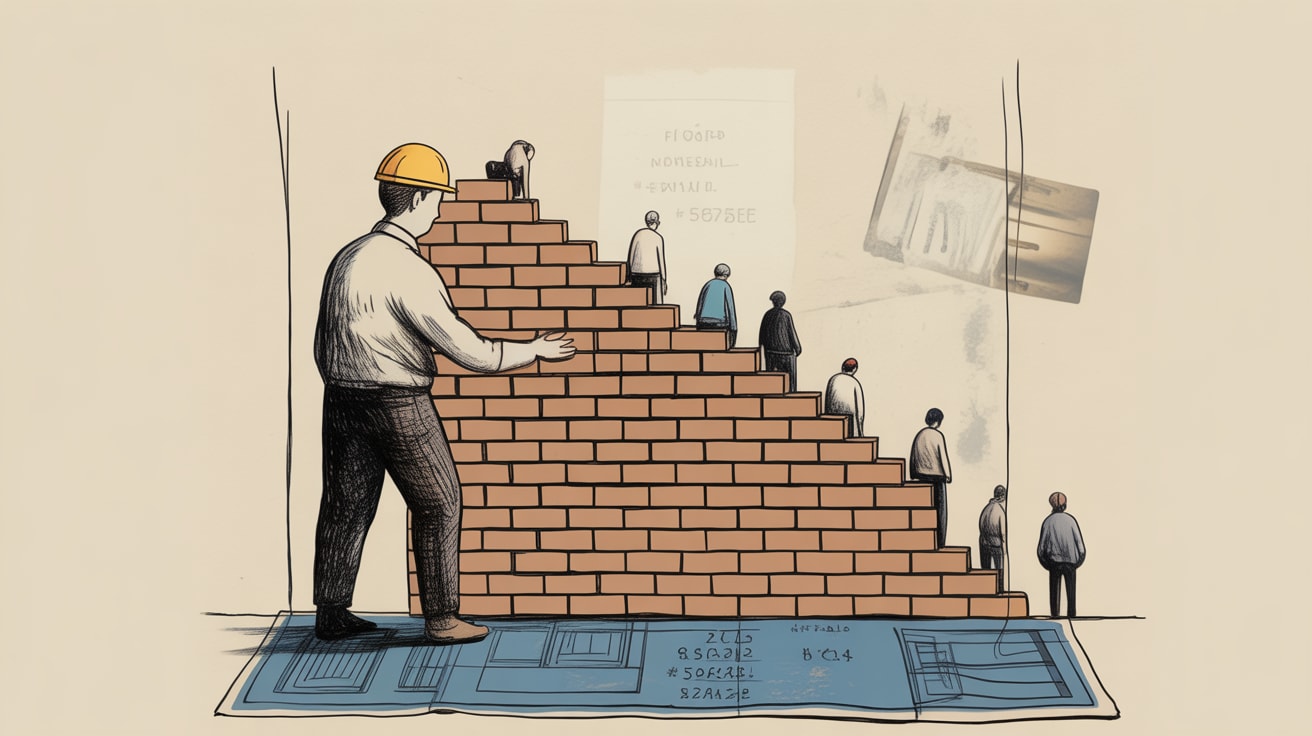
The gap between a design that looks right and one that is right has always been bridged by people talking to each other. A designer pinging a developer to ask why that button keeps breaking. A researcher cornering a PM in the kitchen. A junior asking a dumb question that turns out to be the smartest one in the room. These micro-interactions aren’t inefficiencies. They’re signal. And right now, we’re engineering them out of existence.
The Efficiency Trap in Modern Design Teams
Smashing Magazine’s Casey Hudetz and Eric Olive make a pointed argument: AI tools are quietly eliminating the friction that once required us to reach out to colleagues. That friction — the act of “bugging” someone — was never just overhead. It was how teams built the shared context that makes UX decisions coherent over time. When a designer no longer needs to ask a data analyst why conversion dropped on a specific screen, they also lose the offhand comment about how mobile users in Tier 2 cities behave differently than the dashboard suggests.
For design teams specifically, this matters in a concrete way. UX quality is not just a function of individual craft — it’s a function of collective intelligence. Decisions about information architecture, interaction patterns, and visual hierarchy are better when they’re stress-tested by perspectives from product, engineering, and research in real time. Async AI-mediated workflows make that cross-pollination optional. And optional, over time, becomes rare.
The business cost isn’t abstract either. Design debt — the accumulation of decisions made without adequate context — is expensive to unwind. Teams that lose the informal scaffolding of human interaction tend to produce work that’s technically correct but experientially flat.
”Good Taste” Is a Data Problem in Disguise
The UX Collective flagged a piece this week on what Maria Taneva calls the misrepresentation of “good taste” in UX — one of the most misleading concepts currently circulating in design discourse. As someone who spends most of their time in the data layer, I’d frame it differently: good taste is often just well-calibrated intuition built from pattern recognition across many real interactions. It’s not aesthetic instinct. It’s compressed empirical knowledge.
The risk of leaning on AI-generated design suggestions or trend-driven templates is that they import someone else’s pattern recognition — trained on datasets that may not reflect your users at all. Southeast Asian platforms know this acutely. Shopee’s interface conventions, LINE’s notification UX, and Grab’s checkout flow were not designed by teams optimising for Silicon Valley defaults. They were shaped by iterative exposure to actual user behaviour in high-mobile, high-friction, often low-bandwidth environments.
If your team’s “taste” is increasingly mediated by AI tools trained on Western product patterns, you’re making a bet that your users’ expectations are converging toward those defaults. That’s a bet worth pressure-testing with your own behavioural data before it’s baked into a design system.
Variable Fonts and the Business Case for Design Experimentation
Not everything this week was a cautionary tale. Dinamo’s Arizona typeface campaign — its first out-of-home print activation — is a useful reminder that formal design constraints, when pushed deliberately, produce commercially differentiated results. The campaign, fronted by horsegiirL, uses Arizona’s half-sans, half-serif architecture across streetside billboards and fold-out posters, including what Dinamo describes as variable font karaoke.
For brand and design teams, the strategic lesson here isn’t about typography specifically. It’s about the commercial value of design systems that have genuine formal tension built into them — not just “clean” or “modern” but structurally interesting in ways that create visual recognition across contexts. Arizona works on a billboard and in a small-screen digital environment because its hybrid structure gives art directors something to work with at multiple scales.
In Southeast Asian multi-platform deployments — where the same brand identity needs to function on a LINE sticker, a Lazada banner, a TikTok Shop thumbnail, and a physical retail poster — that kind of systematic flexibility isn’t a nice-to-have. It’s the difference between a brand that holds together and one that fragments across touchpoints. The question worth asking your design team: does your type system have enough inherent tension to be interesting, or is it just legible?
Reframing Design’s Influence Before Someone Does It for You
Kike Peña’s piece in the UX Collective, surfaced by Fabricio Teixeira, argues that 2026 is the moment to actively reframe what product design contributes — not just to products, but to organisations. The invisible walls, as he frames it, have come down. That’s both an opportunity and a risk.
From an analytics perspective, design teams that want to expand their organisational influence need to start speaking in outcome metrics, not output metrics. Not “we shipped a redesigned checkout flow” but “we identified through session replay analysis that 34% of mobile users were abandoning at the address confirmation step, redesigned the progressive disclosure pattern, and recovered 18% of that drop-off within 60 days.” That’s a language finance directors and growth leads actually respond to.
The teams that will shape product direction in the AI era are the ones who can connect qualitative design reasoning to quantitative business outcomes — and who maintain the human relationships that generate the qualitative signal worth having in the first place.
Key takeaways:
- Audit which informal design team interactions AI tools have replaced in the last 12 months — the ones involving cross-functional context are the highest-risk losses.
- Before adopting AI-generated design patterns or templates, validate them against your own behavioural data from Southeast Asian user cohorts, not assumed global defaults.
- Build your design system’s business case in outcome metrics: conversion lift, abandonment reduction, task completion rates — not deliverable counts.
The deeper question worth sitting with: if AI eventually handles 80% of design execution, what is the remaining 20% actually made of — and are you investing in it, or assuming it will take care of itself?
At grzzly, we work with brand and growth teams across Southeast Asia to connect design decisions to the data that validates them — and to build the measurement frameworks that make design’s business impact visible to the people who fund it. If your team is navigating the tension between AI efficiency and design quality, we’d enjoy thinking through it with you. Let’s talk
Sources

Written by
Mellow GrizzlyTranslating raw data into activated audience segments, predictive models, and decisioning logic. Comfortable at the intersection of the data warehouse and the campaign manager.