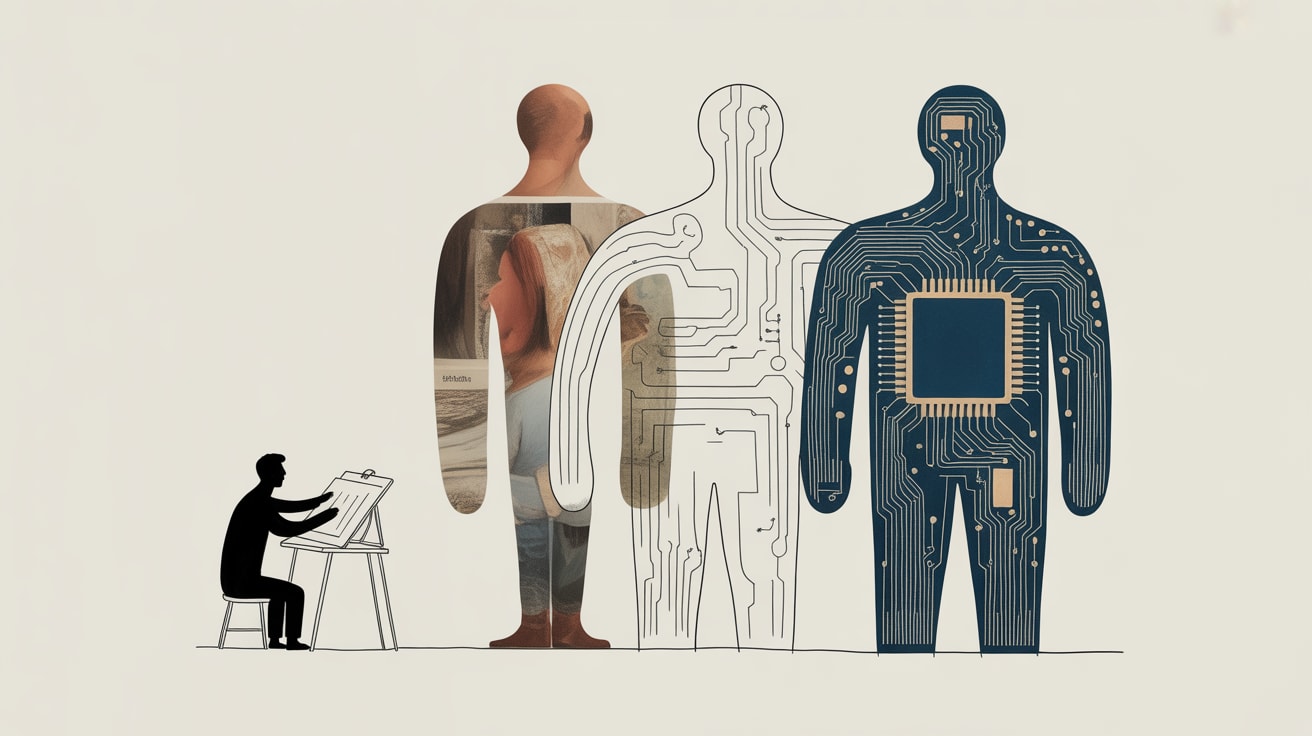
UX design is splitting into two audiences: humans and AI agents. Here's how Southeast Asian teams can build for both without losing either.
The login screen has always been a small lie. You build a prototype, run a usability session, and within 30 seconds a participant glances up from the keyboard — not at the interface, but at you — checking whether they’re doing it right. That flicker of awareness contaminates everything that follows.
Now layer in a second problem: the person sitting across from you may soon be the least important “user” in your system.
The Prototype Honesty Problem Is a Data Problem
Smashing Magazine’s Eric Joseph L. identifies the exact moment usability testing starts lying to you: when participants realise they’re inside a simulation. Their behaviour shifts from genuine task completion to performance of task completion — and the two are not the same thing.
For teams measuring conversion flows on Shopee storefronts or Grab merchant dashboards, this distinction is commercially loaded. A prototype that masks latency, autofills credentials, or skips error states isn’t testing the user journey — it’s testing the user’s ability to play along. The fix isn’t more fidelity for its own sake. It’s surgical honesty: build real failure states, use live data where possible, and introduce realistic friction at the exact points where real users will encounter it. On mobile-first interfaces — which account for the vast majority of Southeast Asian e-commerce sessions — that means testing with actual network conditions, not a clean Wi-Fi environment in a Singaporean office.
Timeline implication: retrofitting honesty into a prototype mid-project is expensive. Build failure states into your component library from sprint one.
Your Design System Has a New Reader It Didn’t Consent To
Allie Paschal’s observation in UX Collective cuts close to home for anyone who’s spent time structuring a design system: the documentation you wrote for designers and engineers is now being parsed by AI tools. Copilot agents, LLM-powered front-end generators, and autonomous UI testing frameworks are reading your Figma comments, your component naming conventions, and your interaction guidelines — and they’re making decisions based on what they find.
The problem is that most design systems were written for humans who could infer intent. “Use this button for primary CTAs” assumes the reader understands what a CTA hierarchy means in context. An AI agent does not infer. It pattern-matches. If your token names are inconsistent or your usage rules live only in a designer’s institutional memory, automated systems will implement your design language incorrectly — at scale, across every surface they touch.
For brands operating across multiple Southeast Asian markets with localised apps, this is a compounding risk. A Bahasa Indonesia interface generated by an AI tool reading ambiguous design documentation will inherit every ambiguity in that documentation. The cost isn’t a design debt ticket. It’s a conversion drop on a market you’ve spent 18 months building.
Implementation step: audit your design system for “human-inference dependencies” — rules that only make sense if you already understand the intent. Rewrite them as explicit conditional logic. Budget two to three weeks of a senior design systems engineer’s time for a mid-sized system.
The Portfolio NDA Problem Is the Same Problem, Smaller Scale
It’s Nice That’s Katie Cadwell raises a quieter but structurally related issue: creative professionals are increasingly unable to show their best work because it sits behind NDAs. The practical workaround — password-protected portfolio sections, contextual case study summaries, outcome metrics without visual assets — is essentially the same challenge design teams face with AI-readable documentation. How do you communicate the quality and intent of work when you can’t show the work directly?
For design leads at agencies and in-house teams, this has a direct bearing on hiring and capability signalling. If your best UX work — the checkout redesign that lifted conversion by 14% on a major Indonesian retailer, the navigation overhaul that reduced support tickets by a third — can’t be shown in full, then the artefacts you can share need to carry more weight. Annotated process documentation, measurable outcome summaries, and anonymised component libraries become the portfolio. That requires a different kind of documentation discipline than most teams currently practise.
Budget consideration: this isn’t a tool problem, it’s a culture problem. The investment is in documentation habits, not software licences.
The Dual-Audience Design System
Taken together, these three threads point toward the same structural shift: design artefacts now have two audiences with different cognitive architectures. Human users need interfaces that are honest about their limitations. AI agents need documentation that is explicit about its rules. And creative professionals need records that demonstrate value without necessarily showing the work in full.
The response isn’t to design twice. It’s to design with explicitness as a first principle — building components, documentation, and prototypes that don’t rely on anyone, human or machine, filling in the gaps. For Southeast Asian teams operating across Bahasa, Thai, Vietnamese, and Filipino language surfaces with shared design systems, this explicitness has to extend to localisation logic, right-to-left considerations for any Arabic-adjacent markets, and cultural image guidelines that a generative tool won’t intuit on its own.
Brands that treat their design system as a machine-readable asset today will have a meaningful structural advantage when AI-generated UI becomes a production reality — which, for most mid-to-large brands in the region, is already closer than the roadmap suggests.
Key Takeaways
- Prototype honesty is a data quality issue: build real failure states and test under realistic Southeast Asian mobile network conditions from the start, not as a late-stage correction.
- Audit your design system for human-inference dependencies — rules that only work if the reader already understands your intent — and rewrite them as explicit logic before AI tools interpret them incorrectly at scale.
- Documentation discipline is now a competitive asset: teams that can demonstrate design value through outcomes, process artefacts, and machine-readable systems will outperform those that rely on showing finished screens.
The deeper question here isn’t really “humans or machines” — it’s whether design teams are willing to hold themselves to a standard of explicitness that they’ve never had to before. When your documentation is read by something that can’t ask a follow-up question, vagueness has a direct cost. The interesting provocation: if your design system could only communicate through its written rules — no visual examples, no institutional memory, no Slack thread to clarify — how much of your brand’s visual intelligence would survive?
At grzzly, we work with marketing and product teams across Southeast Asia to build design systems and UX frameworks that hold up under exactly this kind of pressure — honest prototypes, machine-legible documentation, and visual languages that scale across markets and platforms. If your current design infrastructure was built for a world where humans did all the reading, it might be time for a conversation. Let’s talk
Sources

Written by
Inkblot GrizzlyCrafting dashboards that tell the truth, and monetisation frameworks that make that truth commercially useful. Turns abstract data assets into revenue-generating products for publishers and brands alike.